Before each session, offer the day's three child-controlled routes, the original A–F card and the exact-text/tactile page. One adult may move a large object only as the child directs. Paper is a full route to the day's choice and communication target. It does not show bodily skill. Physical play is opt-in, locally approved and supported: check space/floor, access and safe range; use suitable educator-led warm-up/cool-down outside these short decision scripts; stop or swap immediately. Never infer ability or diagnosis from a child's route. No contact, filming, recorded voice, public solo or family disclosure. Each routine totals 3 + 4 + 5 + 7 + 4 + 2 = 25 minutes.
Week 1 · Day 1 · One place can point to an idea
Target/codes: choose H–R–H or H–L–H and say/show which paper picture might get attention; AC9ADAFD01, AC9ADAFC01. Prepare: A place mat, large H/L/R labels, A.
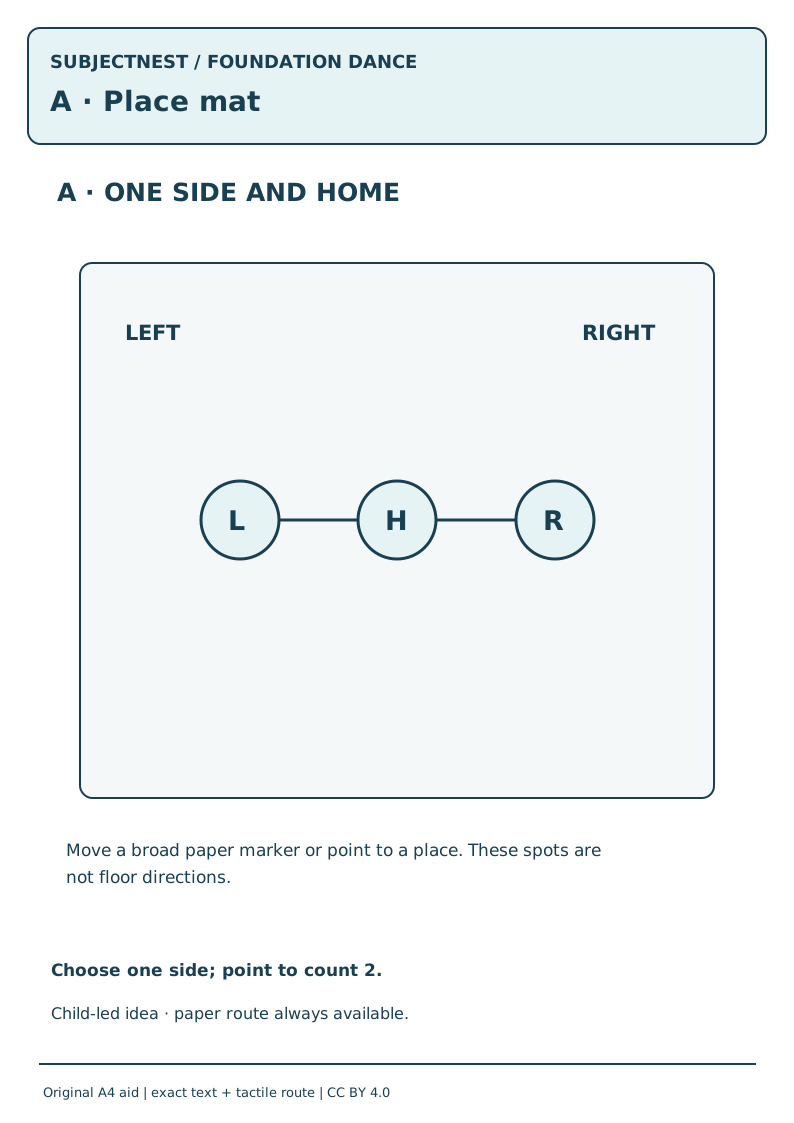
- Welcome · 3 min. Introduce the invented Paper Room. H is a home mark on a table, not a spot to walk to. Ask the child to choose a marker, drawing or locally approved small gesture.
- Model · 4 min. Slide a marker H–R–H on three numbered cards. Say “count 2 points right”; a paper visitor might look at the right picture. Keep the viewer's reaction unknown.
- Try together · 5 min. Put H–L–H beside A. Ask which middle card changed and allow point, speech/AAC or an adult-directed move.
- Child choice · 7 min. Child chooses right or left for a fictional sign and shows a three-count idea by one route. Adult records the child's own purpose and changed/held card, not a movement-quality rating.
- Notice · 4 min. Ask “Which count tells us where?” Check that 1 and 3 return H; accept a child-created other direction if they can name it.
- Close · 2 min. Keep one score and child reason; tomorrow a place can stay instead of returning.
Week 1 · Day 2 · A pause is part of the idea
Target/codes: compare returning H on count 3 with holding R on count 3, and choose one to communicate attention; AC9ADAFD01, AC9ADAFC01. Prepare: C count-and-hold strip, A/B, large HOLD card.
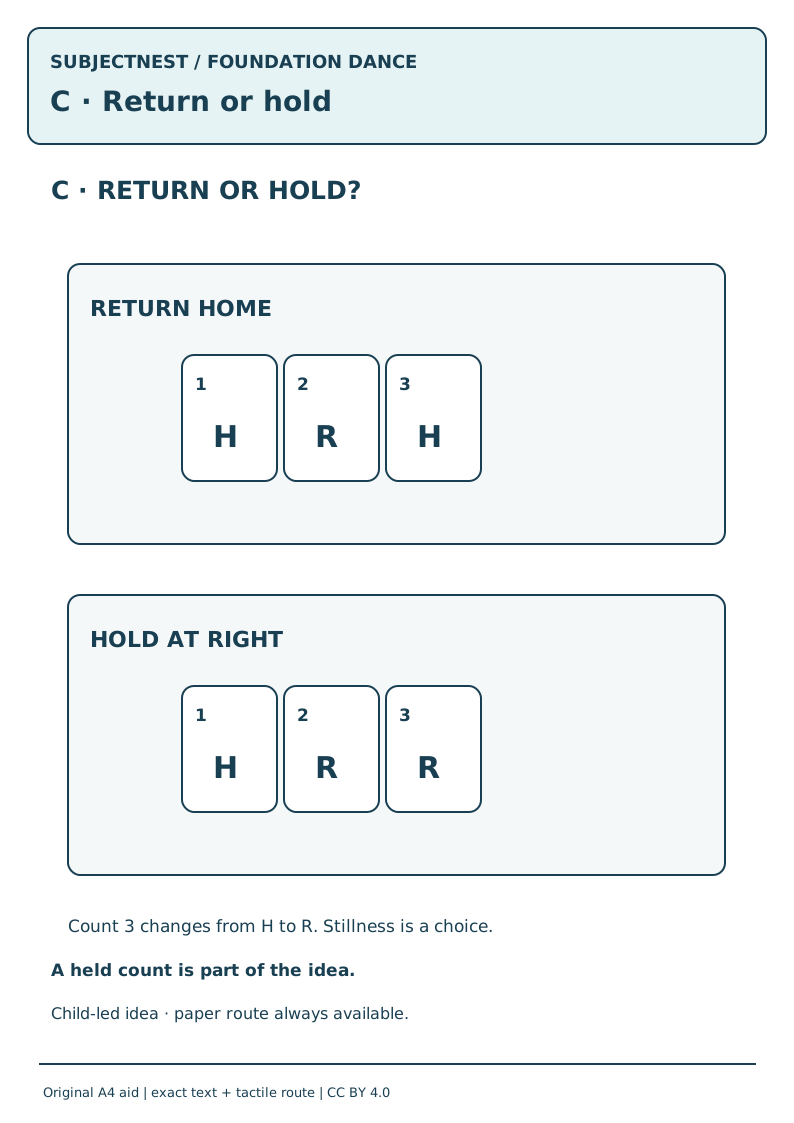
- Welcome · 3 min. Show two rows H–R–H and H–R–R; no child must “freeze” their body.
- Model · 4 min. Slide a marker to R on 2, keep it there on 3. Say that stillness on paper is a choice that can keep a sign in view.
- Try together · 5 min. Let children place a raised HOLD card under count 3 in B; ask what changed from A. Use quiet pointing if speaking is not chosen.
- Child choice · 7 min. Child selects return or hold for a fictional library picture and directs a marker/drawing or opts into comfortable movement.
- Notice · 4 min. Ask whether “every viewer looked there” is known. No: only the score and child purpose are known.
- Close · 2 min. Save the two count-3 positions; next change near/far space.
Week 1 · Day 3 · Near or far on a paper model
Target/codes: compare H–N–H with H–F–H, changing only count 2, and name an intended focus; AC9ADAFD01, AC9ADAFC01. Prepare: B near/far mat, C, broad marker.
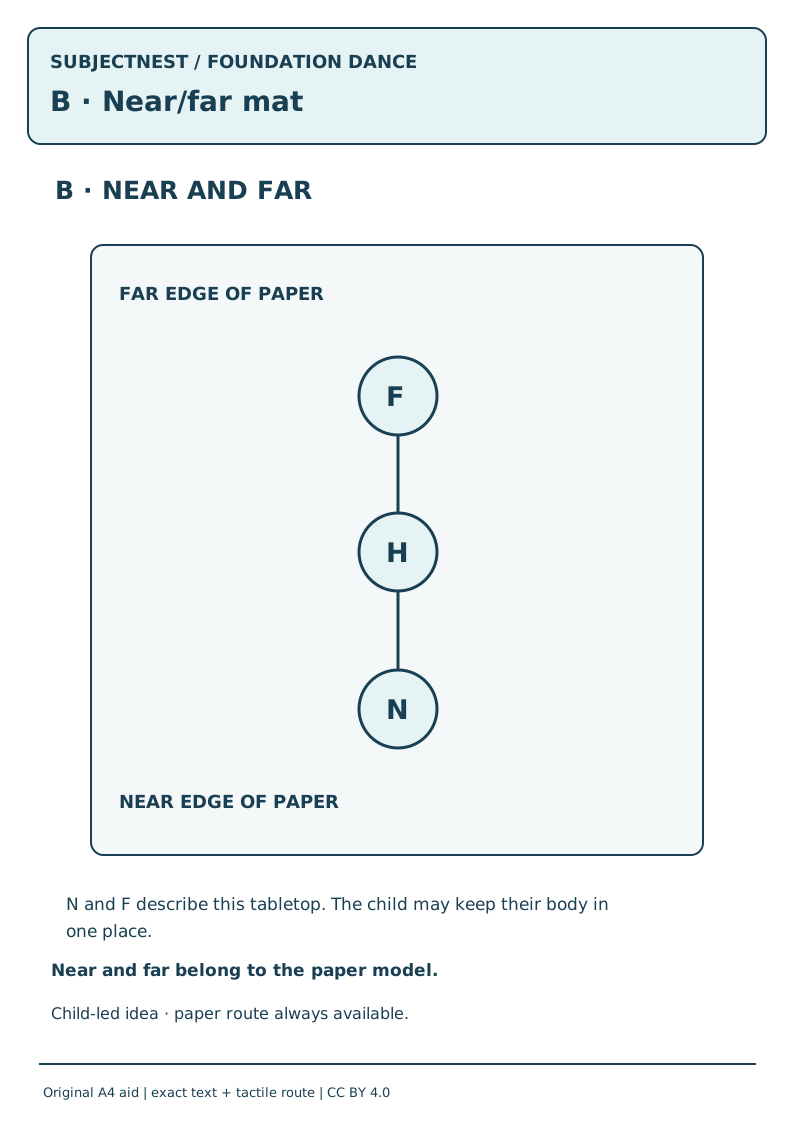
- Welcome · 3 min. Orient near and far from this child's table position. These are paper labels, not a real room navigation task.
- Model · 4 min. Show H–N–H for a near drawing and H–F–H for a far drawing. Keep counts 1 and 3 H.
- Try together · 5 min. Invite a child to direct the adult's marker to N then F on separate copies. Ask which count changed.
- Child choice · 7 min. Child picks a fictional window or table display and makes one three-count score through an offered route.
- Notice · 4 min. Check chosen purpose and N/F at 2 agree. If not, ask “Where would your paper visitor look first?” without fixing the child's answer.
- Close · 2 min. Save score and purpose; tomorrow compare when the marker arrives.
Week 1 · Day 4 · Same places, different arrival
Target/codes: keep H–R–H places, then choose a gradual line or start-of-count arrival mark to change timing; AC9ADAFD01, AC9ADAFC01. Prepare: D time-choice strip, pencil. Optional original three-click cue quietly; three equal count cards work without audio.
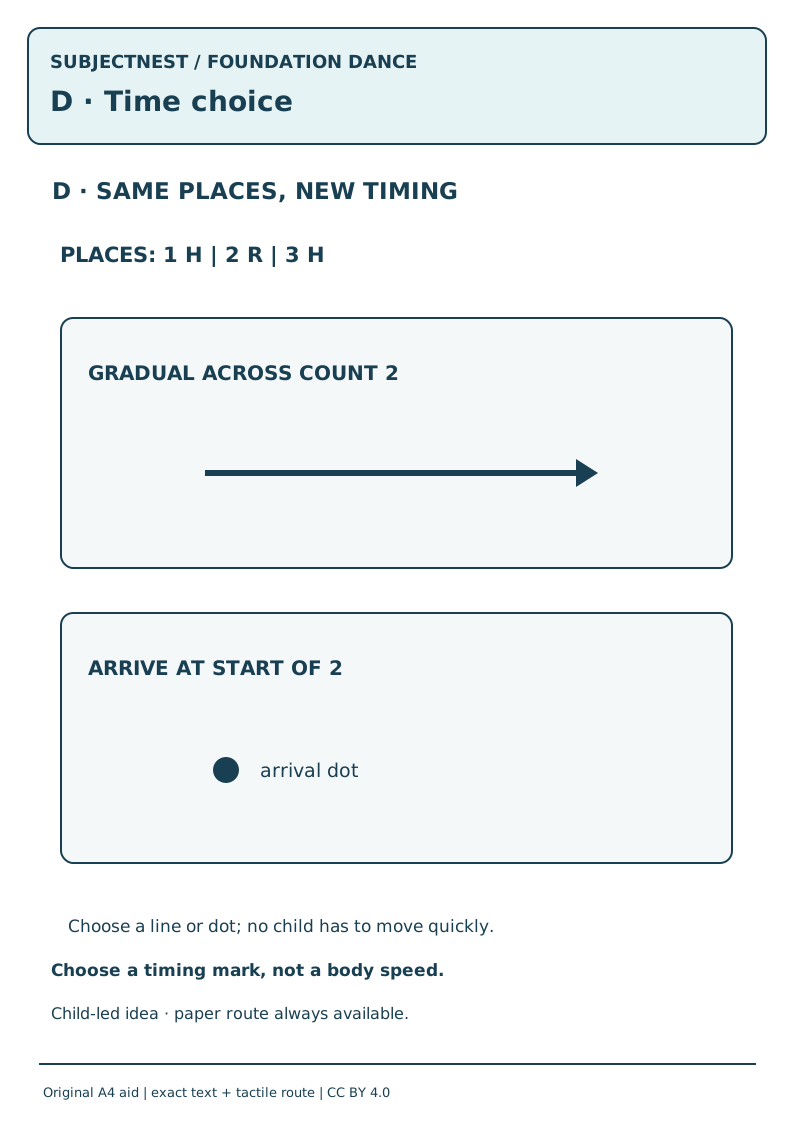
- Welcome · 3 min. Say “gradual” and “early” describe the marker's count-2 timing, not how quickly a child should move.
- Model · 4 min. Draw a long count-2 arrow that reaches R by its end; beside it place a dot at the start of 2. The place row stays H–R–H.
- Try together · 5 min. Children find what stayed and what changed. If sound is used, let any child decline it and follow numbered cards instead.
- Child choice · 7 min. Child chooses one timing for an invented quiet welcome sign and shows it with marker, drawing or approved movement; no demand for speed or force.
- Notice · 4 min. Ask “How do you know which arrival you chose?” Look for arrow/dot or child direction, not body comparison.
- Close · 2 min. Save both versions and child's choice; a new card arrives tomorrow.
Week 1 · Day 5 · Fresh Check A: the paper window
Target/codes: independently change one place in a new three-count score for a stated fictional purpose; AC9ADAFD01, AC9ADAFC01. Prepare: new G check, G sheet, blank broad cards. Keep teacher key closed until first responses are collected.
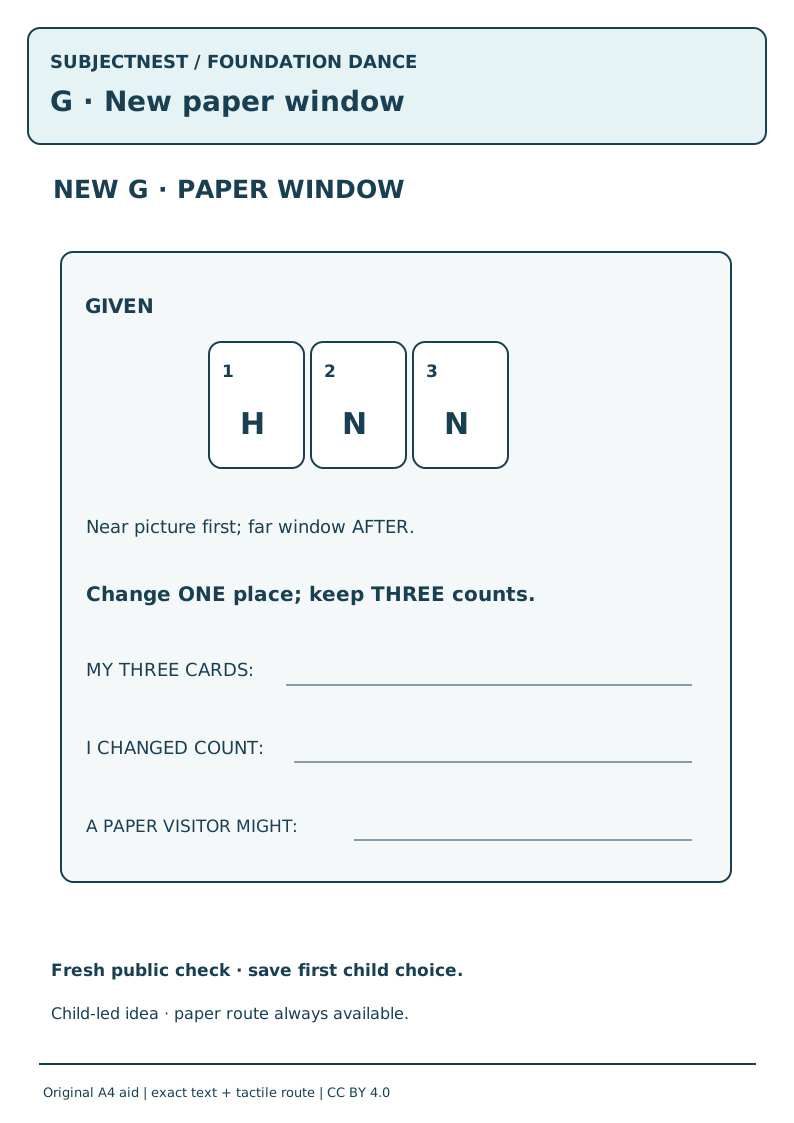
- Welcome · 3 min. Say this is a new paper puzzle to help plan the next lesson, not a test of a child's body or a public show.
- Access · 4 min. Read all G labels or present exact tactile cards neutrally. Explain H/N/F only, not the desired new score.
- Independent plan · 5 min. Child points, draws or tells an adult what count they would change and why. Record the child's first decision without supplying it.
- Child response · 7 min. Child shows three counts by chosen route and shares the intended far-window idea to a willing educator or paper puppet. A scribe records the child's words exactly.
- Self-check · 4 min. Invite the child to check three counts and point to the changed card. Do not rate physical skill from a paper response.
- Close · 2 min. Save first response; use the separate key afterward. Day 5 swaps use other practice cards.
Week 2 · Day 6 · Again can make a pattern
Target/codes: build and notice P then P as two repeats of H–R–H; AC9ADAFD01, AC9ADAFC01. Prepare: E six-count strip, E, two P cards.
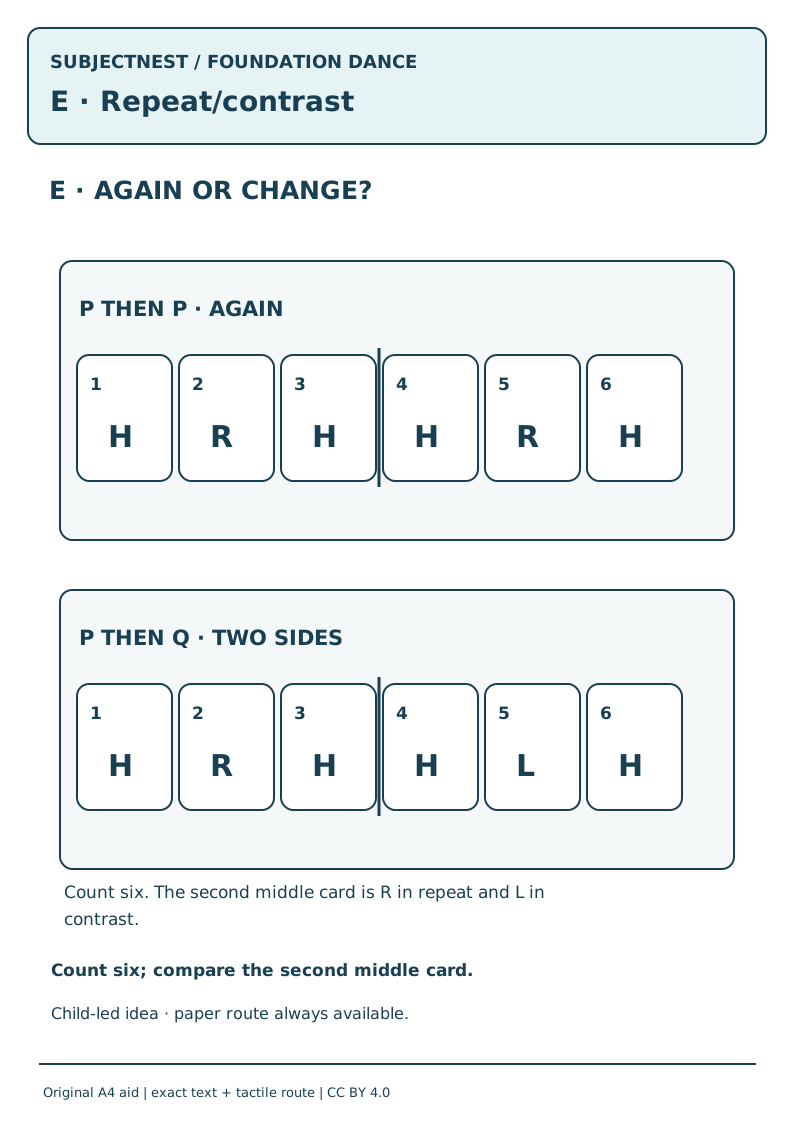
- Welcome · 3 min. Reset with three count cards, then add a second row of three. Six counts can be made with objects while everyone stays seated.
- Model · 4 min. Build H–R–H / H–R–H. Point to the two identical middle cards (2 and 5).
- Try together · 5 min. Children direct a second P row or draw matching arrows. Say “again” because the same side appears twice.
- Child choice · 7 min. Child makes a repeated six-count paper idea for a fictional two-page picture and gives a reason for repeating.
- Notice · 4 min. Count 1–6, including H at 3/4; if a row is missing, rebuild without calling the child's choice wrong.
- Close · 2 min. Save P then P; next a second direction can change the pattern.
Week 2 · Day 7 · Change one part of the pattern
Target/codes: compare P then P with P then Q, where only the second phrase points left; AC9ADAFD01, AC9ADAFC01. Prepare: E six-count strip, P and Q cards.
- Welcome · 3 min. Show yesterday's two P rows. Ask what a different second row could do.
- Model · 4 min. Change count 5 from R to L, giving H–R–H / H–L–H. Name the idea “one side, then another” in this paper example.
- Try together · 5 min. Point to counts 2 and 5. Are they the same or different in each version? Let a neutral scribe mark answers.
- Child choice · 7 min. Child chooses repeat or contrast for an invented two-window drawing, using a route that suits them.
- Notice · 4 min. Check the six cards and child purpose. A possible viewer focus is a guess; the child's score is observable.
- Close · 2 min. Save both versions; tomorrow an object may be pointed at without being touched.
Week 2 · Day 8 · A paper object can join the idea
Target/codes: choose approaching or pointing towards a separate object marker, and explain the visible relation; AC9ADAFD01, AC9ADAFC01. Prepare: A place mat, F, large paper star and mover cards.
- Welcome · 3 min. Name the star as invented paper, not a real prop or cultural symbol. No partner contact is needed.
- Model · 4 min. Put star at R, mover at H. Version one moves the marker towards R on 2; version two leaves mover H and points an arrow card R.
- Try together · 5 min. Ask which version changes distance and which changes facing/pointing. Move only paper pieces as children direct.
- Child choice · 7 min. Child makes one relationship score for a fictional display, by gesture if chosen/approved, tokens or drawing.
- Notice · 4 min. Ask for one visible clue and one possible message. Do not infer a feeling or body skill from token use.
- Close · 2 min. Keep the selected arrangement; Day 9 asks who may receive it.
Week 2 · Day 9 · Who made it, and who can see it?
Target/codes: choose a safe audience for an original idea and pose one source/permission question about a real work; AC9ADAFP01 with AC9ADAFE01 only as a starting question. Prepare: F choice/share card, child's own A–F score, authentic-source slot. No external dance is reproduced.
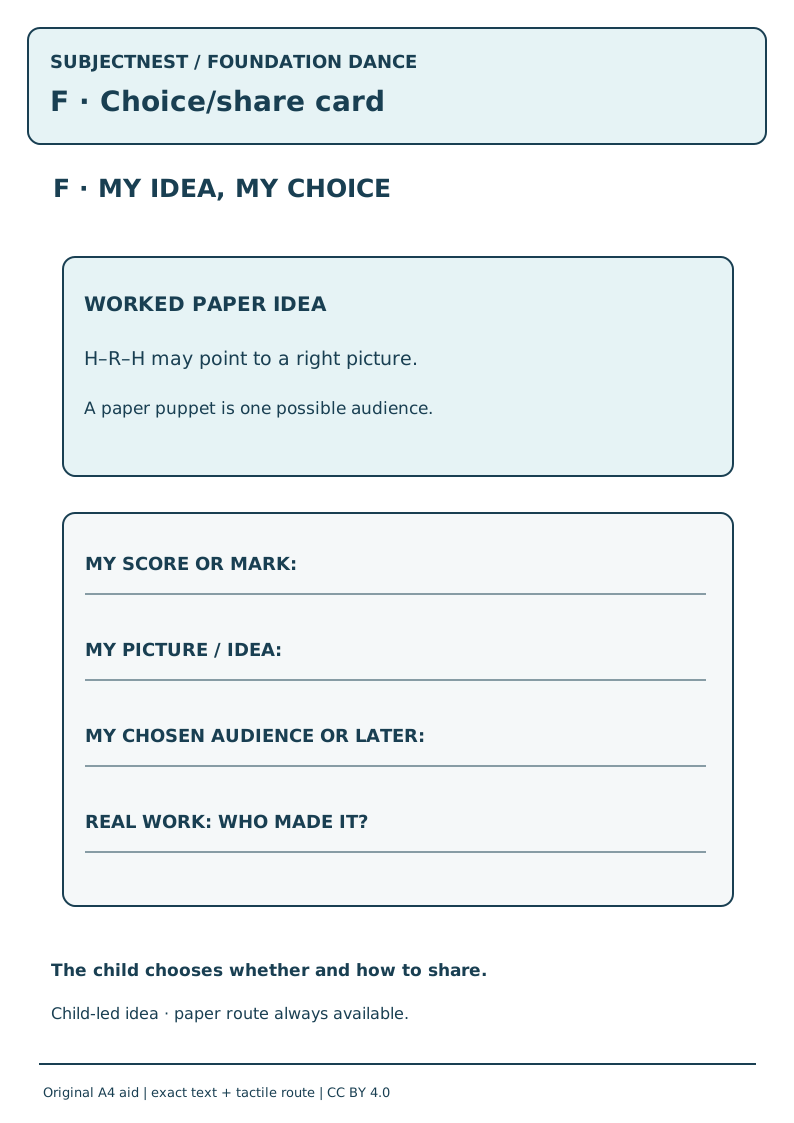
- Welcome · 3 min. Say a child can show their paper idea to one willing educator, a paper puppet or, if they choose, a small group. Passing is accepted.
- Model · 4 min. Share the adult's own H–R–H paper score with a paper puppet. Then point to a first-party company resource title; its maker is known, but permission to copy its dance is not.
- Try together · 5 min. Ask “Who made this paper score?” and “Who made the real work named on a page?” Keep those answers separate; no child is asked to imitate it.
- Child choice · 7 min. Child selects an A–F original arrangement and willing audience or records an intention to share later. If sharing, the chosen route conveys the child idea; an adult notes exactly what was shared.
- Notice · 4 min. Ask what the school would need to learn before showing/using a real work: maker, permission, and why people value it from a trustworthy source. Keep the authentic lesson on hold until approved.
- Close · 2 min. Record child's audience choice and one question, not an invented claim about a community.
Week 2 · Day 10 · Fresh Check B: two panels
Target/codes: independently notice a six-count repeat, change one part to suggest two fictional panels, and share the idea by choice; AC9ADAFD01, AC9ADAFC01, AC9ADAFP01 as child-controlled sharing. Prepare: new H check, H sheet, six cards. Keep teacher key closed until first responses.
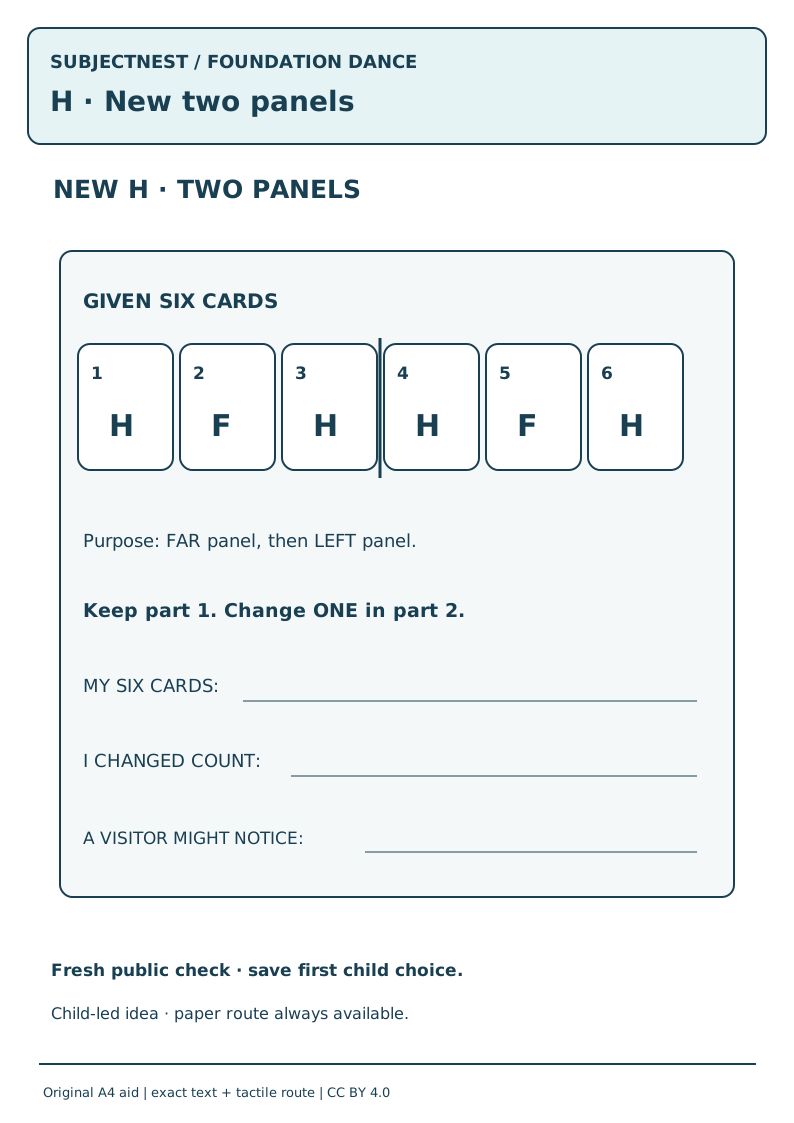
- Welcome · 3 min. Explain the fresh paper model; no public performance or body rating. A willing adult or paper puppet can be the audience.
- Access · 4 min. Read H's six positions and far/left panel purpose neutrally. Supply large/tactile cards without pointing at the change to make.
- Independent plan · 5 min. Child finds whether the two rows repeat and chooses one position in row two to change.
- Child response · 7 min. Child constructs six counts through a route, points to changed count, tells/marks a possible two-panel idea, and chooses whether/how to share it.
- Self-check · 4 min. Count six and separate observable score from possible viewer response. Do not infer physical competence from paper-only simulation.
- Close · 2 min. Save first response, then consult key and plan later real-work and physical-play opportunities with school approval.