Version: v0.1 draft, 29 September 2026. Status: educator, accessibility, cultural-protocol and local-syllabus review pending. Audience: Australian Curriculum Foundation Year / Queensland Prep, after Weeks 15–16, not pre-Prep kindergarten. Use: ten 25-minute daily lessons, original cards and text alternatives, a cut-out picture response sheet, a picture-response display page, a fictional shared-yard map, a fresh assessment map, and a formative assessment. These are two weeks of a continuing draft, not a full-year course.
The 40-week planning map sets Week 17 for collecting and sorting picture responses to a class question and Week 18 for location words and simple map paths. Use these lessons beside the separate Week 17 two-view making guide and Week 18 shared-place care guide. Their media and real-place evidence is recorded separately from this maths check.
| Day | Main mathematical work | Proposed Foundation link |
|---|---|---|
| 81 | Give one familiar question and sort a fictional picture-response set | AC9MFST01 |
| 82 | Transfer sorted objects to picture marks one for one | AC9MFST01; AC9MFN03 |
| 83 | Make the class question, categories and fair collection rule clear | AC9MFST01 |
| 84 | Collect anonymous voluntary responses and preserve actual counts | AC9MFST01 |
| 85 | Compare real results, ties/zero if present and sample limits | AC9MFST01; AC9MFN03 |
| 86 | Describe self/object position using a stable reference | AC9MFSP02 |
| 87 | Match symbols to places on an invented familiar-space map | AC9MFSP02 |
| 88 | Trace and describe a two-leg connected path | AC9MFSP02 |
| 89 | Revise a route around a paper closure and test with a user | AC9MFSP02 |
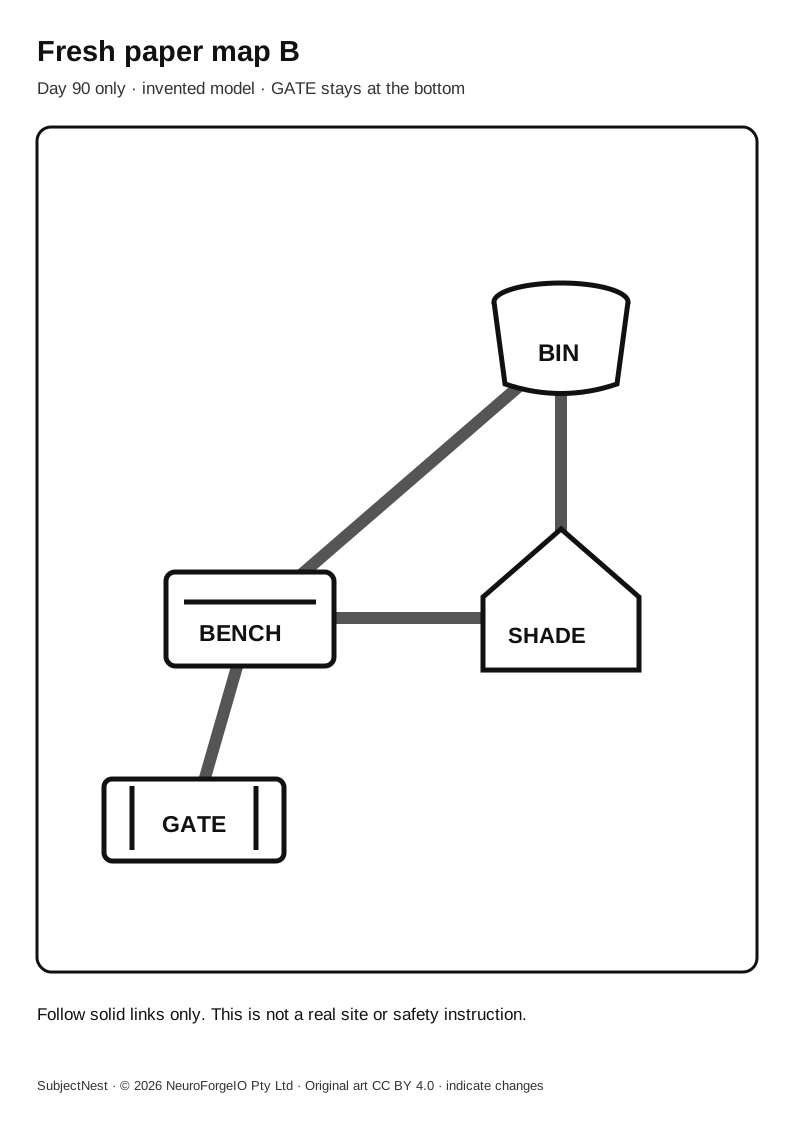
| 90 | Fresh data and map evidence with next teaching move | AC9MFST01; AC9MFSP02 |
Prepare once, then use the actual evidence
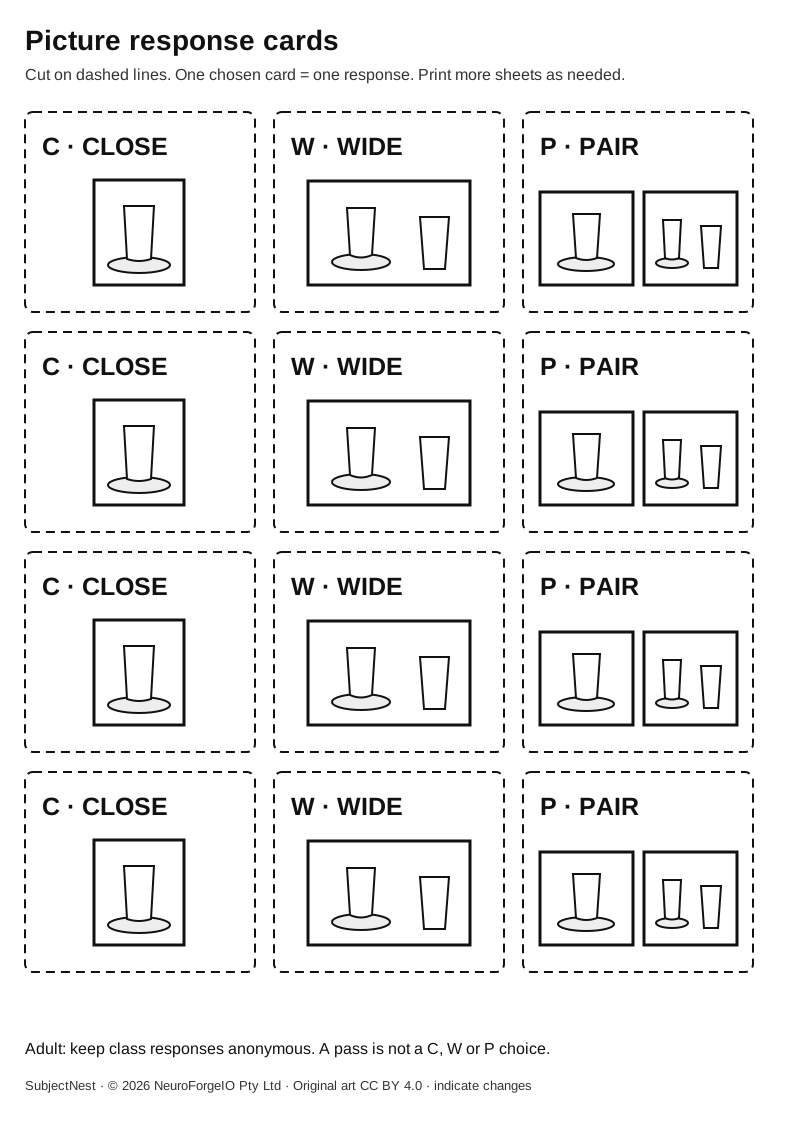
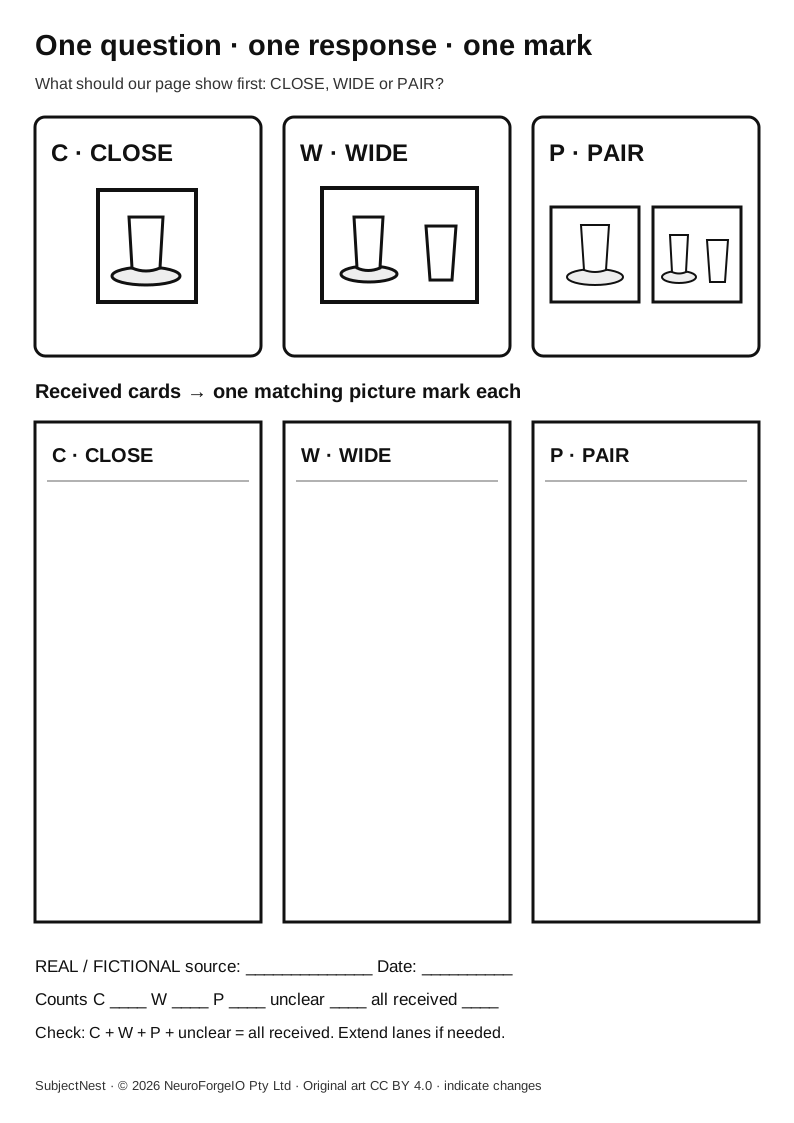
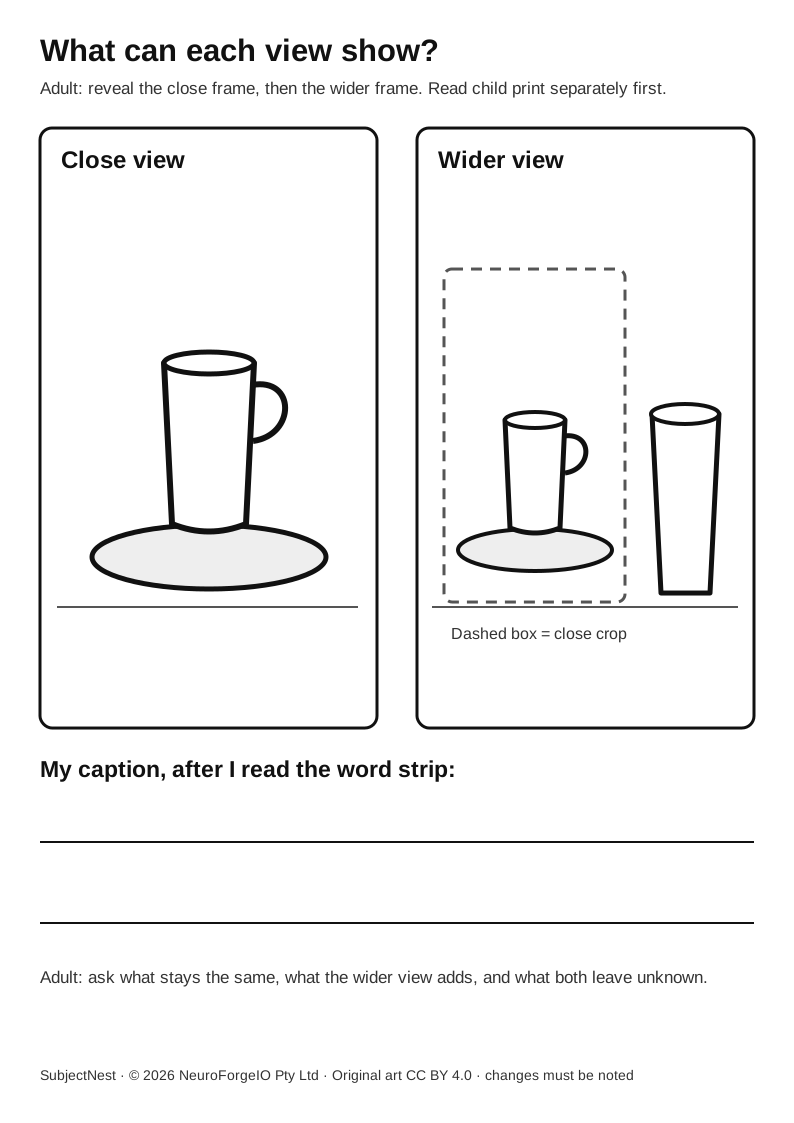
Week 17: The class question is “What should our page show first: CLOSE, WIDE or PAIR?” Choices are C = close view, W = wider view, and P = paired views together of the invented cup-and-tray scene. These are page-layout choices, not learner identities, abilities or “learning styles.” Use the original two-view English aid or its text alternative to make the choices intelligible. For each response received, one learner privately selects exactly one of three large, distinct, word-and-shape picture cards. A child may pass without explanation; do not record names. Sort the received cards by the stated rule and transfer one card to one mark in its column. Record the actual count and number of received responses, which can differ from class enrolment. No real class result has a printed answer key. A fictional deck is clearly marked fictional for rehearsal and for days with no usable response collection.
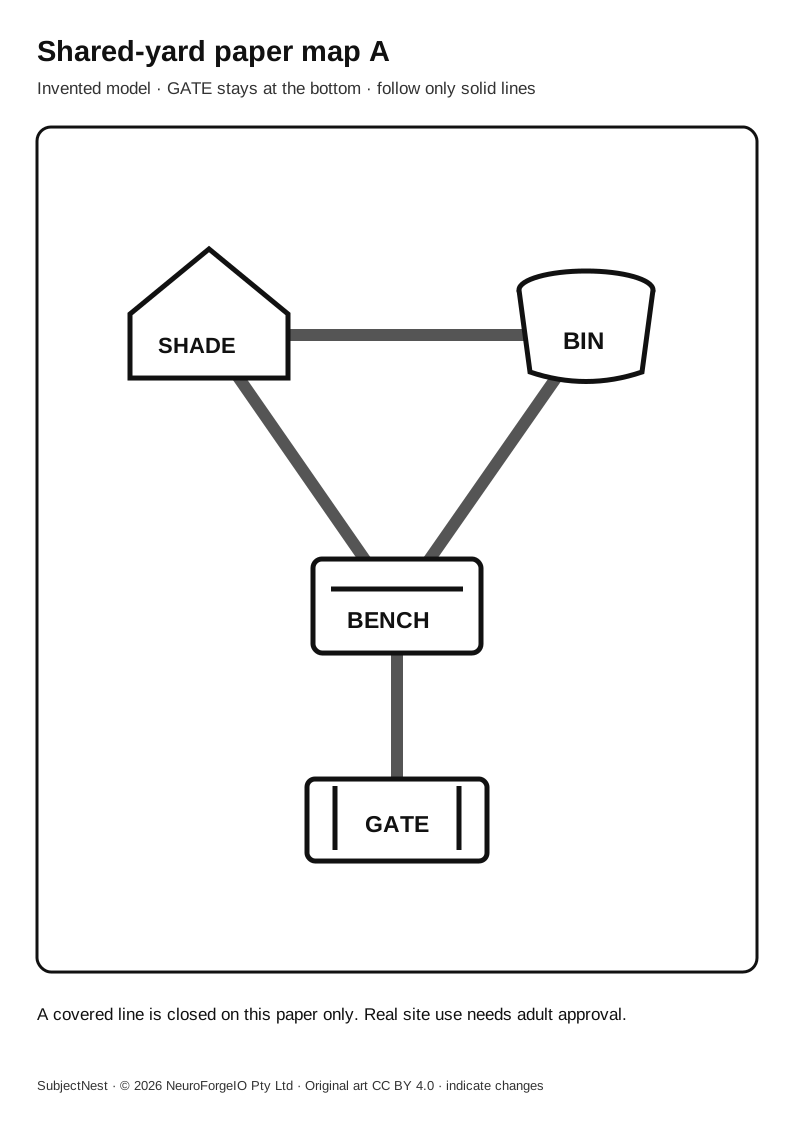
Week 18: The map is an invented tabletop shared yard, not a map of a real school, route to a child's home, Country/Place knowledge or a safety approval. Its four named places are gate, bench, shade and bin. Thick solid lines are the only walkable paper links. A learner moves a large marker along connected lines and describes location relative to a named object or a page orientation fixed by the gate at the bottom. A drawn distance is not a measured walking distance. For a real outdoor care action, a teacher must separately check a current approved site/map, access needs and safety; no unknown litter is handled. This pack records spatial reasoning even when no real outing occurs.
Equipment and access: Print the A4 SVGs or use the exact text layouts, large/high-contrast symbols, raised outlines and thick connecting strips. Keep category cards larger than any unsafe loose-part size. Offer tactile and digital sorting, child-directed adult movement, a quiet/private response, spoken directions with written transcript, sign or AAC. Record whether a child gave the mathematical choice/direction independently even if an adult moved a marker. No mandatory walking, fine-motor speed, colour vision, public preference disclosure or personal location data. Identifiable child records stay in the school's approved private system.
Curriculum, research and rights
The exact Foundation descriptions below were checked against the ACARA Version 9.0 official workbook, downloaded 29 September 2026 (SHA-256 db446882d2c00cf7c085a03e250e2442fda6c44011fc114680c46c1dc7a822c3) and the pinned local data/frameworks/acara-v9.json. They are proposed partial links, not ACARA approval or a complete achievement-standard decision.
- AC9MFST01: “collect, sort and compare data represented by objects and images in response to given investigative questions that relate to familiar situations.”
- AC9MFN03: “quantify and compare collections to at least 20 using counting and explain or demonstrate reasoning.” The small fixed decks and received response counts sample this code; they do not by themselves show fluency across its full range.
- AC9MFSP02: “describe the position and location of themselves and objects in relation to other people and objects within a familiar space.” The tabletop map is a model; Day 86 additionally offers an actual familiar classroom reference where accessible.
ACARA Mathematics describes the Foundation-to-Year-10 learning area. AERO early numeracy and Monitor progress inform concrete representation, mathematical talk and a fresh recheck; those sources are linked and paraphrased, not endorsements. Check the locally adopted syllabus and school safety/privacy rules before use.
ACARA rights: The three curriculum descriptions above are reproduced without modification. © Australian Curriculum, Assessment and Reporting Authority (ACARA) 2010 to present, unless otherwise indicated. Source: Australian Curriculum v9 official workbook, accessed 29 September 2026. Covered curriculum material is CC BY 4.0 subject to ACARA terms and exclusions. ACARA does not endorse, sponsor or approve SubjectNest. No ACARA logo, work sample or third-party illustration is included.
Original material licence: © 2026 NeuroForgeIO Pty Ltd. The original scripts, examples, forms, vector art and assessment in this folder are CC BY 4.0, including commercial reuse with attribution and a note of changes. Suggested credit: “NeuroForgeIO Pty Ltd, SubjectNest: What our pictures show; where a path goes — Foundation mathematics, Weeks 17–18, v0.1 (2026), source, CC BY 4.0.” This licence does not relicense ACARA, AERO or any separate English pack. No translated, recorded-audio or classroom-validated edition is claimed.