Use briefs, the learner page, routes, extras, and four print aids. Preparation: print or display the named brief and aid; set out plain paper, large full-word cards and thick pens. For a diagram target, offer magnetic/cardboard labelled pieces or a zoomable drawing canvas. Collect one dated artefact or voice transcript and note any content prompting separately from access support. Times total 25 minutes each. Days 5 and 10 use first-encounter fictional files; the teacher key is public.
Day 1 · Who designs for whom?
Target: Link two plausible design professions to different parts of one brief, name a stakeholder and the evidence limit. Prepare: Card A, Evidence ladder.
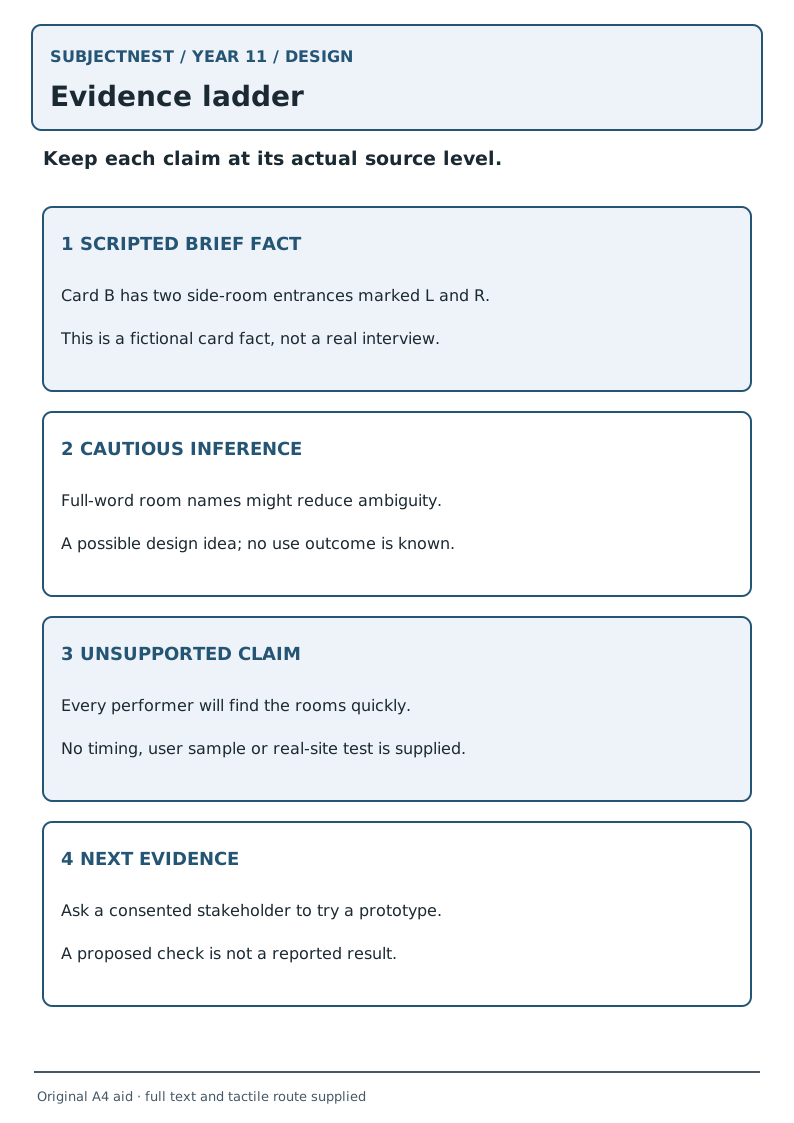
Launch · 2 min. Ask: “Is a shelf sign the whole library problem?” Accept “no” and point to sign, physical token and space as separable work. Model · 4 min. Underline Card A's existing colour-dot sign. Say a graphic designer might change the information, an industrial designer the tokens, and an interior designer the shelf layout; each needs more information. Guided reading · 5 min. Learners identify borrower and volunteer needs and flag that the scripted librarian comment gives no frequency. Prompt, “Which exact words support that?” Practice route · 7 min. Let each choose a Day 1 route; require two role/output links, one stakeholder need and one unknown. Audit · 4 min. Swap or self-check: each role has a distinct output and the unknown is not presented as fact. Exit · 3 min. Complete: “I would ask ___ before claiming ___.” Use the Day 1 key.
Day 2 · A scripted voice is not a population
Target: Separate stated fictional brief information, cautious inference and unsupported claim about a stakeholder. Prepare: Cards A/B, Evidence ladder.
Launch · 2 min. Read Card B's two scripted statements. Model · 4 min. Sort “one performer wants a non-audio way” as stated in the fiction, “labels may help” as a possible design inference, and “all performers need labels” as unsupported. Guided reading · 5 min. Groups mark the source for A's lighting question and B's doorway-reader context, then circle missing real-world evidence. Practice route · 7 min. Use Day 2 choices: two stated items, one conditional inference, one overclaim rewritten. Audit · 4 min. Ask “How many people did this fictional note sample in reality?” Answer: none. A preference here can guide a paper exercise only. Exit · 3 min. Write or say a useful next stakeholder question without requesting private disability details. Record next move from the key.
Day 3 · Turn a complaint into a design problem
Target: Frame a bounded problem with stakeholder, needed function, existing design and constraints. Prepare: Card B, Problem to criteria.
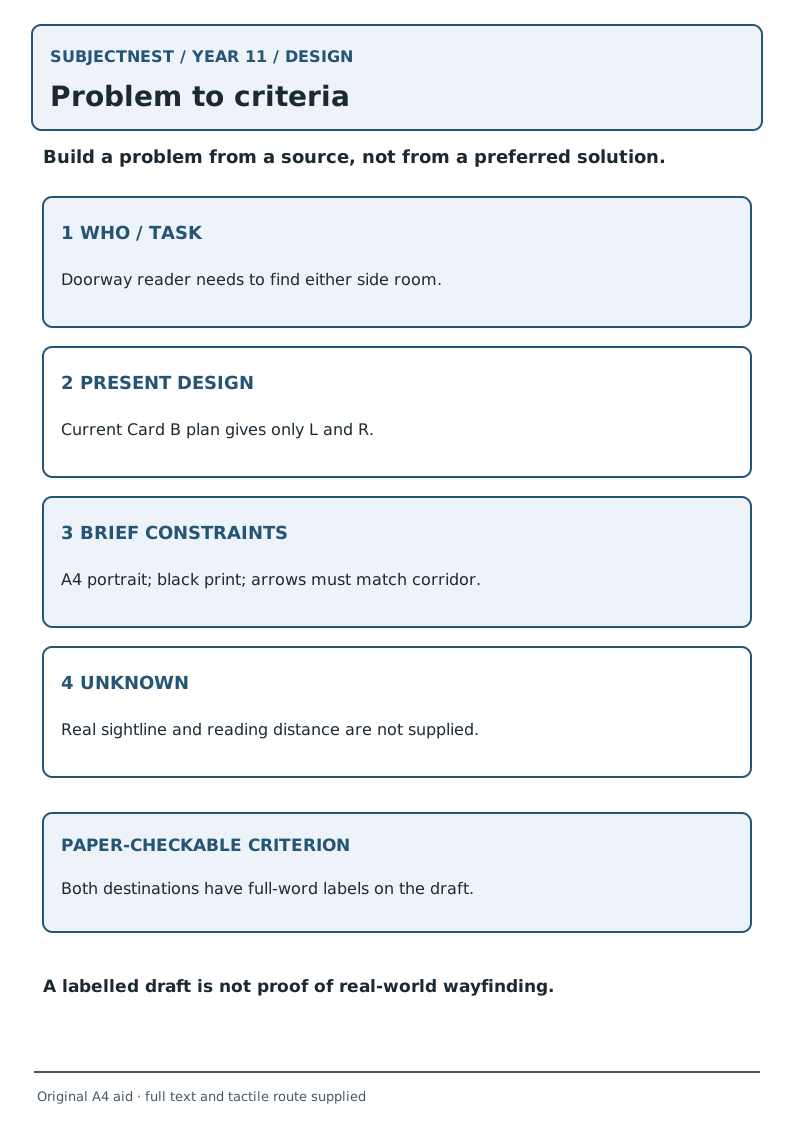
Launch · 2 min. Contrast “make a nice sign” with a problem that names whom it serves. Model · 4 min. Draft: “How might a doorway reader find either side room using an A4 black-print board when the present L/R plan has no legend?” Mark A4/black print as brief constraints, not universal rules. Guided reading · 5 min. Learners test whether a loudspeaker-only idea would meet the scripted performer's stated need; it would not. They identify one unknown (sightline). Practice route · 7 min. Use Day 3 choices to make one problem sentence, two constraints and one question. Audit · 4 min. Remove invented dimensions or diagnoses; specify both destinations. Exit · 3 min. Peer/teacher asks “Could I tell when you solved this?” If not, identify a future criterion.
Day 4 · Criteria that could actually be checked
Target: Convert Card C's need into two checkable paper-prototype criteria and distinguish a requirement needing later measurement. Prepare: Card C, Problem to criteria.
Launch · 2 min. Show three identical unlabelled boxes; ask what the sorter would inspect. Model · 4 min. “Exactly three spaces, each named in words” can be checked on paper. “Real tools fit safely” cannot be checked without dimensions/testing; list it as an open verification. Guided reading · 5 min. Identify label size versus compartment area as a tradeoff; do not assert a fit. Practice route · 7 min. Use Day 4 choices for two criteria, one constraint and one evidence gap. Audit · 4 min. For each criterion ask “show me where I would look on a prototype”; tighten vague “easy” language. Exit · 3 min. Students identify one thing a real stakeholder might decide differently.
Day 5 · First transfer: Paper Path check
Target: Independently source a fictional stakeholder need, state a bounded design problem and two checkable criteria without claiming real user evidence. Prepare: Give File G alone; any Day 5 route is available. Keep the public key off the display until collection.
Launch · 2 min. Remind learners that fictional lines must not become real research claims. Source access · 4 min. Read File G silently, by neutral read-aloud, zoom or full-word tactile cards. Explain only vocabulary, not which answer to choose. Independent plan · 5 min. Learners mark stakeholder, existing design, constraint and unknown. Independent response · 7 min. Complete the four File G prompts through the chosen route. Self-audit · 4 min. Check each criterion against the given two-sheet/greyscale brief and qualify the untested claim. Submit · 3 min. Collect first responses. Use the G key/next moves after submission; log any content help.
Day 6 · Make the first low-fidelity layout
Target: Represent a spatial information hierarchy using a labelled sketch, movable full-word pieces or zoomable diagram, with one annotation tied to stakeholder need. Prepare: Card D, Idea loop, A4 blank frame.
Launch · 2 min. Say “a rough diagram can test arrangement before polish.” Model · 4 min. Place four group-name placeholders in rows, a heading above, and an update-date box; annotate that the date serves the updater and readers. Avoid real pool times. Guided reading · 5 min. Learners locate Card D's two competing needs and note actual reading distance is unknown. Practice route · 7 min. Use Day 6 modes to represent the same hierarchy and mark a possible revision. Audit · 4 min. Can another person find group and date without relying on colour? Read the layout in order; fix a missing relation. Exit · 3 min. Submit a labelled prototype and one still-unanswered user question.
Day 7 · Two genuinely different ideas
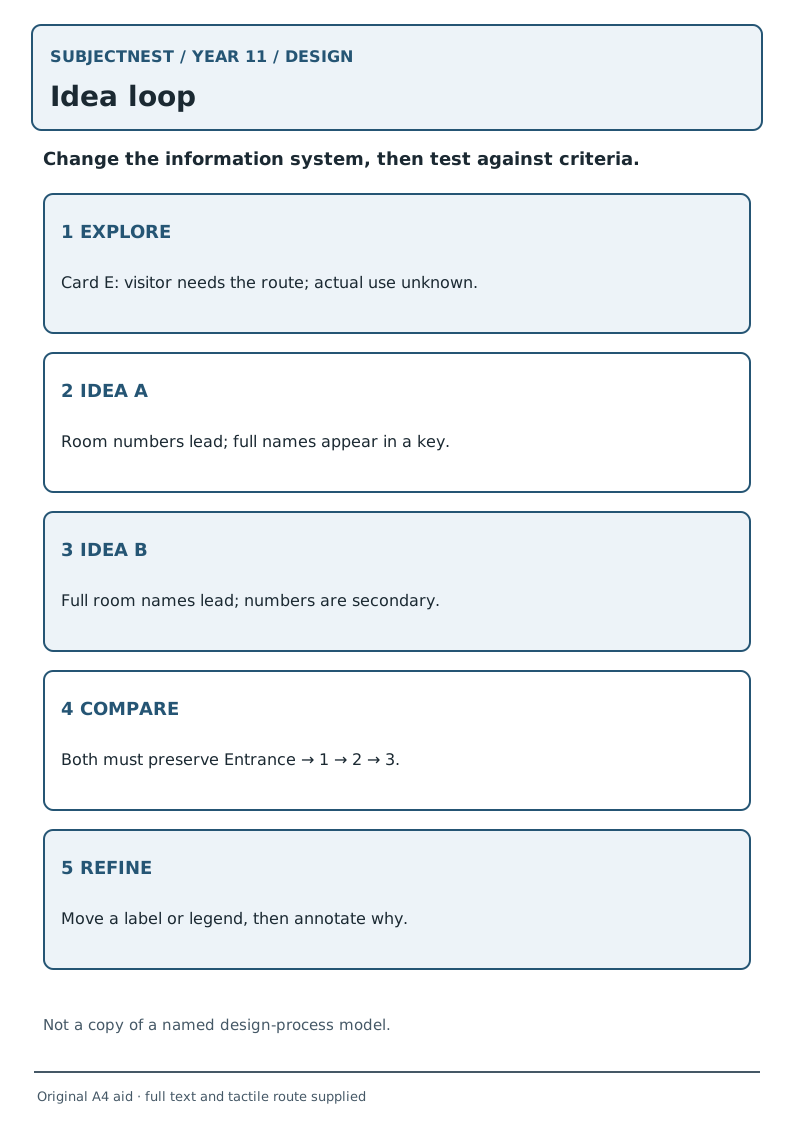
Target: Devise two alternative low-fidelity layouts for Card E, changing a meaningful design attribute while preserving the stated corridor. Prepare: Card E, Idea loop.
Launch · 2 min. Draw Entrance → Room 1 → Room 2 → Room 3 as the fictional route. Model · 4 min. Contrast a number-led map and a room-name-led map; moving only the title is not a new wayfinding idea. Guided reading · 5 min. Learners decide what the mock curator, volunteer and visitor each might use; separate those brief statements from unverified visitor preference. Practice route · 7 min. Use Day 7 choices to produce two layouts with room labels, desk and valid corridor. Audit · 4 min. Trace both routes and check that no arrow invents a doorway. Exit · 3 min. Label the difference between the two ideas and the criterion each could serve.
Day 8 · Compare, then disclose what you cannot know
Target: Compare two Card F mock options against two criteria, identifying one strength, one limitation and an evidence need. Prepare: Card F, Decision grid.
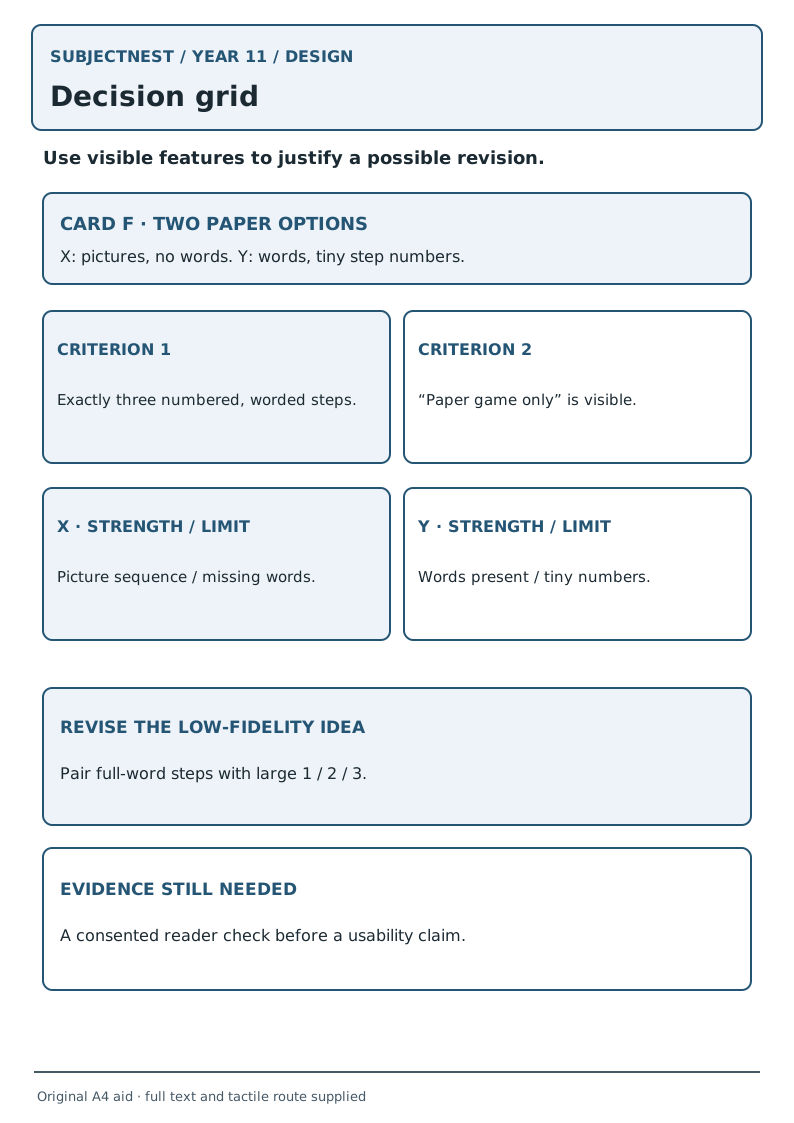
Launch · 2 min. Ask why “looks best” cannot settle whether a new reader follows three steps. Model · 4 min. Option X has pictures but no words; Option Y has words but tiny numbers. A paper check can see whether full-word steps and large numbers appear, not whether every reader understands them. Guided reading · 5 min. Build two criteria: exactly three numbered steps, each described in words; “paper game only” visible. Practice route · 7 min. Use Day 8 routes to compare X/Y, cite a visible feature and propose one combined change. Audit · 4 min. Cross out any “users preferred…” statement unsupported by the invented card. Exit · 3 min. State what a consented future user review should check.
Day 9 · Revise for a stakeholder, and show the change
Target: Show before/after low-fidelity Card F concept, justify one refinement against a criterion and name an unverified outcome. Prepare: Card F, Decision grid, Idea loop.
Launch · 2 min. Re-read the three-step and game-label constraints. Model · 4 min. Replace small numbers with large 1/2/3 and pair each with a worded action; annotate how a reader could locate the order. This is a concept, not a user-tested success. Guided reading · 5 min. Learners point to a feature carried from X/Y and a feature changed; ask whose requirement it addresses. Practice route · 7 min. Use Day 9 choices to make a before/after representation, one evidence-linked reason and an open test question. Audit · 4 min. Check that “after” is visibly different and the reasoning cites the criterion, not taste alone. Exit · 3 min. Write a 20-second proposal to the fictional organiser, with a limit statement.
Day 10 · Second transfer: Studio Swap check
Target: Independently define a fresh fictional design problem, devise two distinct diagram ideas, select/refine one against criteria and state the evidence limit. Prepare: File H, blank paper or equivalent accessible layout materials; keep the public key unseen until first response.
Launch · 2 min. Name the explore-to-develop move without giving File H answers. Source access · 4 min. Read H through an access route only. Independent plan · 5 min. Mark roles, what is stated, constraints and unknowns. Independent response · 7 min. Produce two labelled spatial alternatives, pick one and annotate a change using Day 10 routes. Self-audit · 4 min. Confirm each idea respects the stated position/order and that no real feedback is claimed. Submit · 3 min. Collect, then consult the H key/next moves. This check is not a QCAA/school instrument.