Each session uses 2 + 4 + 5 + 7 + 4 + 3 = 25 minutes. Prepare the original practice cases, clean learner pages, daily switchable routes, four A4 aids and public teacher key. All case businesses, figures, stakeholder comments and forecasts are fictional. Seven minutes is an initial response window; extend time locally. The syllabus's authentic case-study requirement remains open for school work.
Day 1 · What can this case actually show?
Target: separate stated case evidence, interpretation and an unsupported claim. Prepare: Cards A/B/C and evidence ladder.
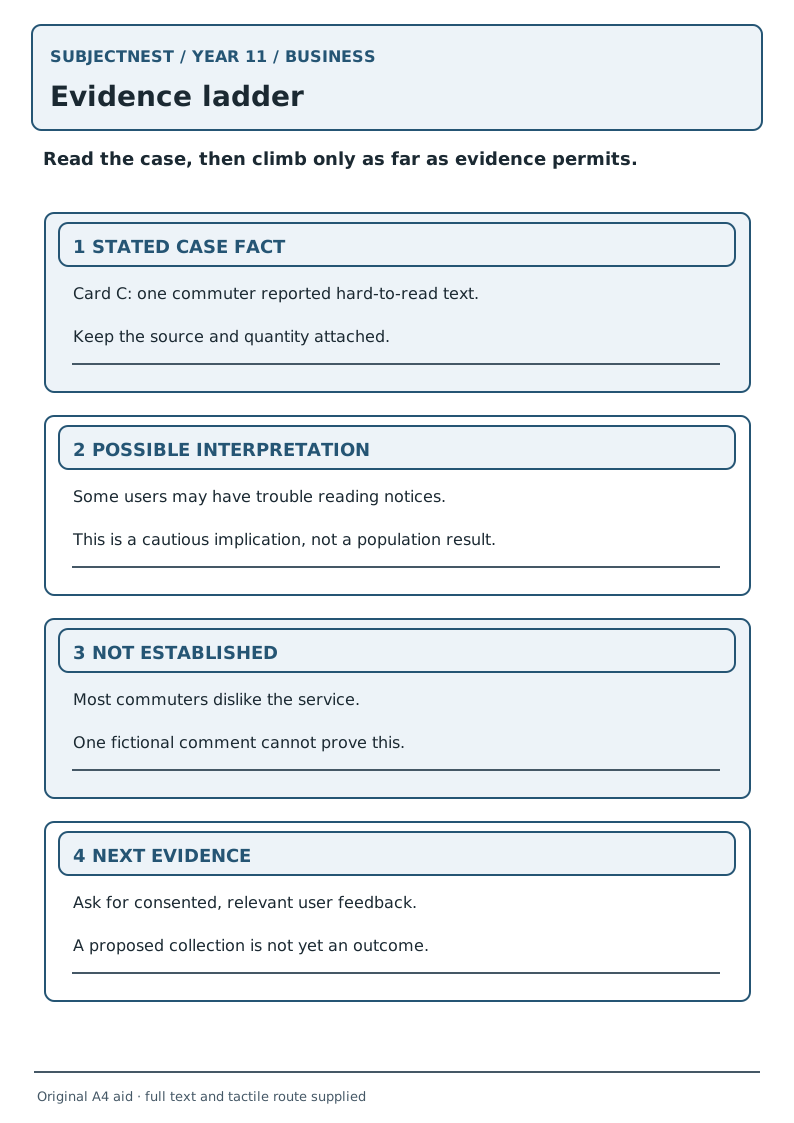
- Launch · 2 min. Read Card C's one commuter comment. Ask whether it proves most commuters have the same concern.
- Model · 4 min. Put “one fictional commuter reported hard-to-read text” on the stated rung; “some users may have difficulty” on the possible interpretation rung; “everyone dislikes the noticeboard” on the unsupported rung.
- Guided reading · 5 min. Compare Cards A and B: one community-based idea and one profit-based service. Name an actual card fact and a missing datum for each; distinguish purpose from proof of impact or profitability.
- Practice route · 7 min. Choose Day 1 route and make three claim/evidence/limit triples across two different cards.
- Audit · 4 min. Partner removes an invented population, profit or impact claim and identifies the evidence that would be needed.
- Exit · 3 min. “Does a single comment establish stakeholder satisfaction?” Key: no; it is one reported view in an invented case.
Day 2 · Locate the business life-cycle stage
Target: use case evidence to distinguish seed and start-up while leaving unclear stages unresolved. Prepare: Cards A/B/C/E and life-cycle/goals map.
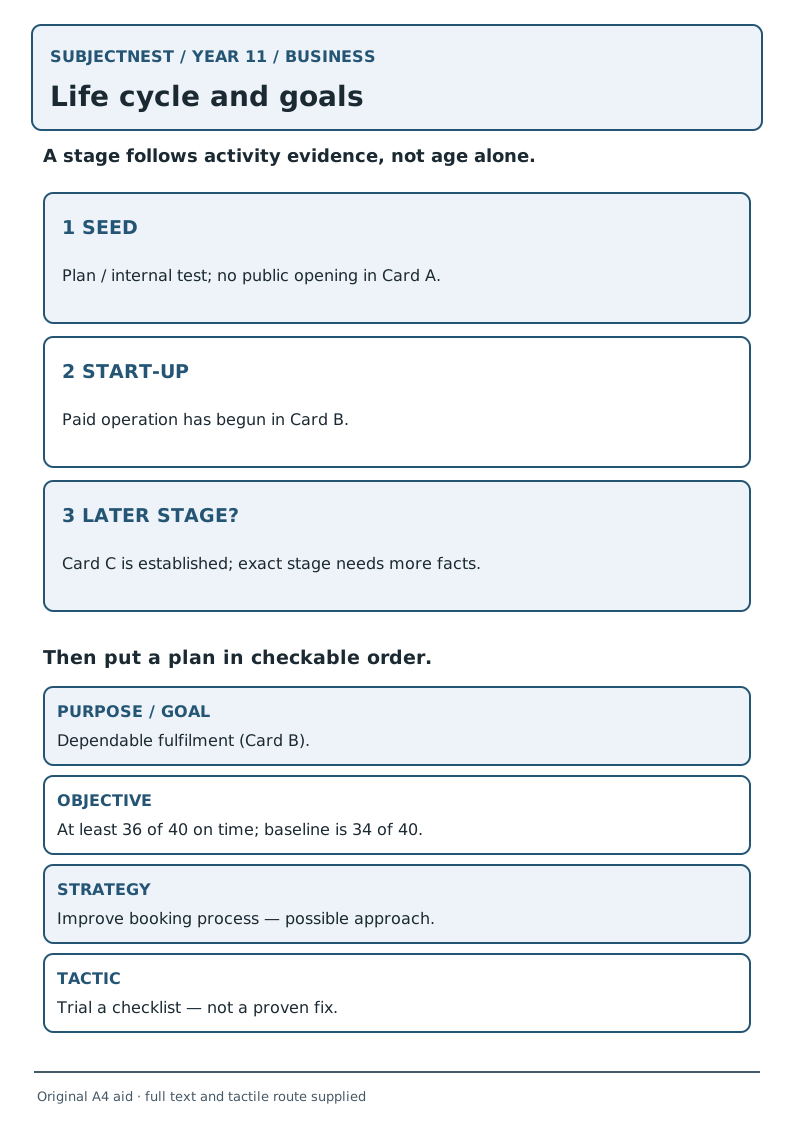
- Launch · 2 min. Ask whether age alone determines a life-cycle stage.
- Model · 4 min. Card A explicitly labels seed: plan tested internally, no public opening. Card B labels start-up: taking paid orders for three months. Name what operations have begun, not simply calendar time.
- Guided reading · 5 min. Card E is seed and Card C an established service, but C alone does not give enough data to determine the exact later stage. Point to the QCAA life-cycle order without pretending all stages have been taught.
- Practice route · 7 min. Choose Day 2 route; position A/B/E and write a bounded note for C with cited evidence.
- Audit · 4 min. Partner claims “twelve staff means maturity”; learner explains why staff count by itself cannot settle stage.
- Exit · 3 min. “What suggests B has moved beyond the seed idea?” Key: paid orders and active operation, as stated in this fictional case.
Day 3 · From purpose to measurable action
Target: distinguish purpose/mission, goal, measurable objective, strategy and tactic in a case. Prepare: Cards A/B and life-cycle/goals map.
- Launch · 2 min. Show Card B's “dependable fulfilment” and “at least 36 of 40 on time.” Ask which is directly checkable.
- Model · 4 min. Treat “dependable fulfilment” as broad goal and 36/40 in a comparable week as objective; 34/40 is baseline, so the gap is two additional on-time orders. A booking-process improvement is a possible strategy; a particular checklist is a tactic, not a proven fix.
- Guided reading · 5 min. Card A's purpose makes a possible mission; “two trial sessions” needs timeframe/resources to become a robust objective. Ask what its one-Saturday-per-month availability means for planning.
- Practice route · 7 min. Choose Day 3 route; build a purpose→goal→objective→strategy→tactic chain for B, with one evidence gap.
- Audit · 4 min. Partner marks a forecast as achieved; learner restores “proposed/unproven.”
- Exit · 3 min. “How many additional B orders on time would reach 36/40 from 34/40?” Key: two; no claim that the checklist will do it.
Day 4 · Inside, close outside and wider outside
Target: classify internal, external operating and macro environmental factors from stated evidence, and flag when a macro claim is only hypothetical. Prepare: Cards B/C/D and environment/SWOT mat.
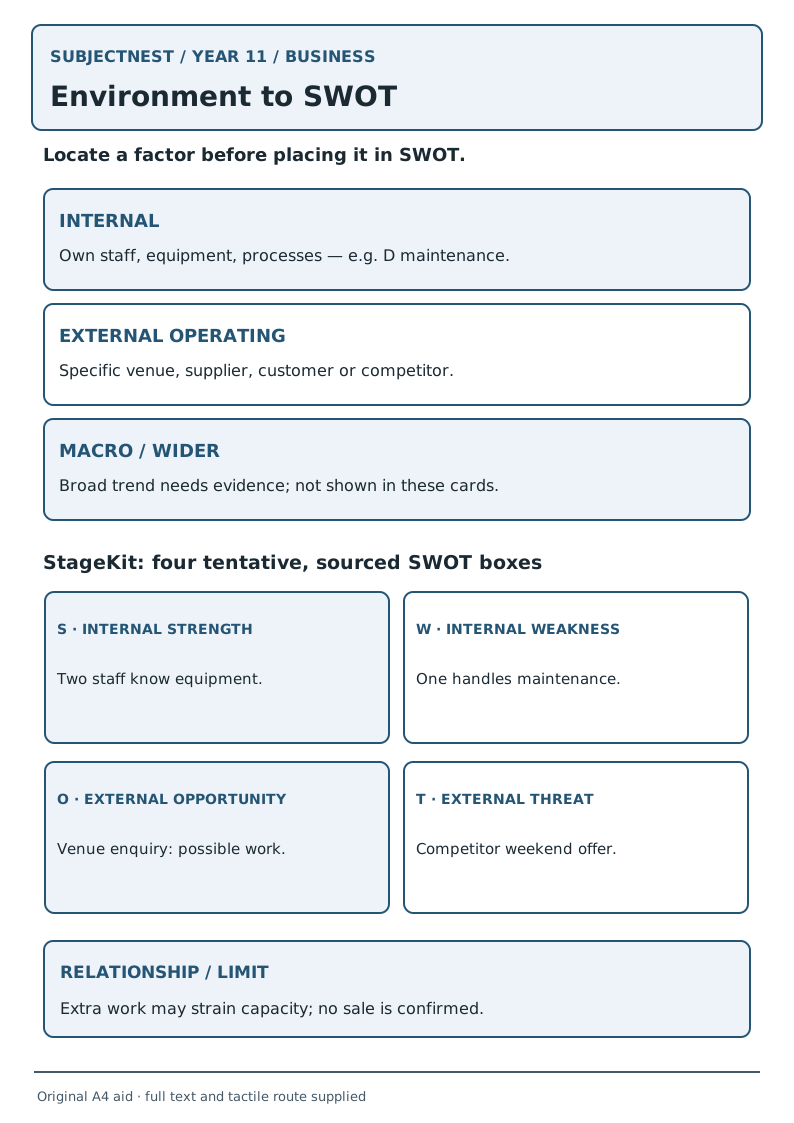
- Launch · 2 min. Put StageKit's limited maintenance hours and venue enquiry side by side. Ask which is within its own operation.
- Model · 4 min. Limited maintenance capacity is internal; the particular venue enquiry is external operating. A broad economy-wide shift would be macro if supported by evidence; these cards do not report one.
- Guided reading · 5 min. Sort B's one printer (internal), named competitor advert (external operating), C's one comment (external stakeholder evidence). Don't promote a single comment to a macro trend.
- Practice route · 7 min. Choose Day 4 route; sort four cited facts across B/C/D and write one missing macro-data question.
- Audit · 4 min. Partner changes a local competitor into a general legal factor; learner repairs scope and names the information that could support a macro claim.
- Exit · 3 min. “Is StageKit's one maintenance person internal or macro?” Key: internal, with a capacity implication to investigate.
Day 5 · Public fresh check A: Borrow Bench
Target: transfer evidence limits, stage, goal and environment classification to new File G. Prompt and key are public, not secure. Prepare: blank evidence and life-cycle mats; record access support.
- Launch · 2 min. State the task: decide only from the new fictional file and propose one bounded next action.
- Source access · 4 min. Release File G without worked answers; log reading, scribing or AAC support.
- Independent plan · 5 min. Learner marks stage facts, an internal capacity factor, a specific external offer and the proposed objective.
- Independent response · 7 min. Choose Day 5 route and retain the first response before any content prompt.
- Self-audit · 4 min. Learner checks whether their recommendation assumed a venue, staffing or demand not in the file.
- Submit · 3 min. Collect work/support log; use the public key to choose the next instruction.
Day 6 · A SWOT needs sources, not adjectives
Target: place one cited internal strength/weakness and one external opportunity/threat in a modest SWOT, then interpret one relationship. Prepare: Cards A/D and environment/SWOT mat.
- Launch · 2 min. Ask whether “we are wonderful” is enough evidence for a strength.
- Model · 4 min. From Card D: two trained staff → possible internal strength; one person carrying maintenance and changes → possible internal weakness; venue enquiry → external opportunity to investigate; competitor weekend collection → external threat to consider. Keep each linked to source wording.
- Guided reading · 5 min. Interpret a relationship: more event enquiries may strain one-person maintenance capacity. That is a risk inference, not a measured missed booking.
- Practice route · 7 min. Choose Day 6 route; complete a four-box SWOT for D and one “because…may…” implication, then test a second box with A.
- Audit · 4 min. Partner tries to put an internal toolkit under opportunity; learner corrects to internal strength/resource, with the limited quantity perhaps a weakness.
- Exit · 3 min. “Why can a venue enquiry be an opportunity without being confirmed sales?” Key: external possibility; actual conversion is unknown.
Day 7 · Four functions, one business goal
Target: explain how finance, human resources, marketing/communication and operations contribute differently to a given goal. Prepare: Cards B/C and functions/criteria board.
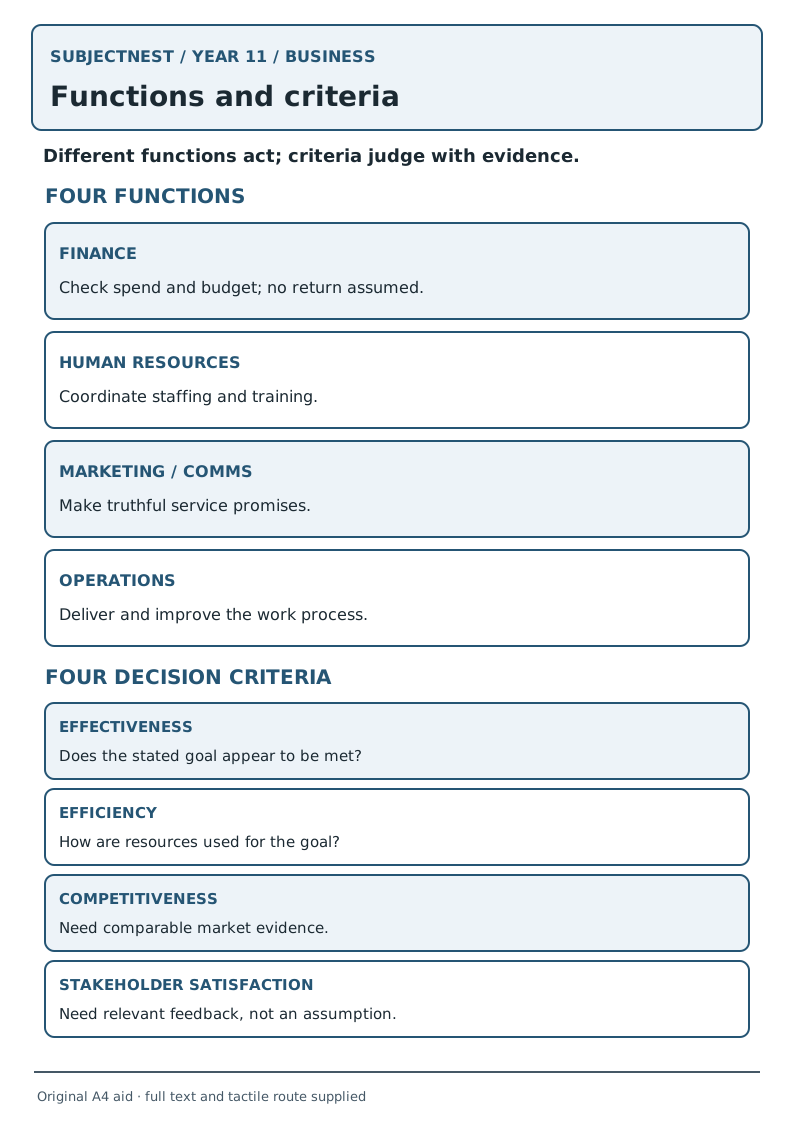
- Launch · 2 min. Ask whether fixing B's late orders is only a marketing task.
- Model · 4 min. For B, operations schedules/produces; HR coordinates staff; finance tests a proposed spend against its fictional budget; marketing communicates service promises. None alone proves 36/40 will be achieved.
- Guided reading · 5 min. Trace C's accessibility goal across its four given fictional roles. The single comment identifies a concern, not a measured outcome for any function.
- Practice route · 7 min. Choose Day 7 route; make a four-function action grid for B or C and identify one dependency between functions.
- Audit · 4 min. Peer calls advertising an operations fix; learner explains what would actually change the work process and what communication can truthfully say.
- Exit · 3 min. “Which function tracks a proposed budget?” Key: finance, but approval/return require more facts.
Day 8 · Stakeholders may want different things
Target: name stakeholders, distinguish a stated preference from an assumed one, and propose a consented way to learn more. Prepare: Cards C/E and evidence ladder.
- Launch · 2 min. Ask whether two Raincheck volunteers know what all listeners prefer without asking them.
- Model · 4 min. E's volunteers, potential listeners and library venue have different roles and possible needs. No listener survey has been run, so format preference is unknown. A text/audio sample with consented feedback is a plan, not a success claim.
- Guided reading · 5 min. Compare C's one commuter comment with E's no-listener-data situation. Discuss what each supports and what would make a recommendation stronger.
- Practice route · 7 min. Choose Day 8 route; build a stakeholder-evidence-question table for C or E, with no personal disclosure from the class.
- Audit · 4 min. Partner says “everyone needs audio”; learner narrows the claim and asks an ethical, nonidentifying question.
- Exit · 3 min. “Can we score stakeholder satisfaction for E yet?” Key: no; relevant feedback is absent.
Day 9 · A decision needs a criterion and a limit
Target: compare two fictional options by effectiveness and a narrow resource-use ratio, while withholding broader efficiency, competitiveness and satisfaction claims. Prepare: Card F and functions/criteria board.
- Launch · 2 min. Read F's baseline 12 positive/20 and objective 18/20. Ask whether either forecast actually meets 18.
- Model · 4 min. A forecasts 16/20, B 15/20; neither meets the objective. A has the larger projected improvement (four vs three). Fictional cost per additional projected positive slip: A $80÷4=$20, B $30÷3=$10. This narrow ratio is not total business efficiency.
- Guided reading · 5 min. Compare the tradeoff: A more effective against this target; B cheaper per projected additional positive slip. No causes, revenue, competitor or population satisfaction data is given.
- Practice route · 7 min. Choose Day 9 route; recommend a bounded next step for F with one criterion, both calculations and one explicit uncertainty.
- Audit · 4 min. Partner turns forecast into actual success or 20 slips into “all visitors”; learner repairs both claims.
- Exit · 3 min. “Which option meets 18/20 in its forecast?” Key: neither, so a prudent recommendation should include a test or better evidence.
Day 10 · Public fresh check B: Page Pop
Target: transfer SWOT, business functions and criteria-based decision making to new File H. Both check and key are public. Prepare: blank SWOT/functions mats and support log.
- Launch · 2 min. State task: use the new case's stated figures, make a bounded decision and identify missing evidence.
- Source access · 4 min. Release File H alone; log access mode and avoid revealing its worked key.
- Independent plan · 5 min. Mark baseline/objective/options, one internal and one external factor, and the functions relevant to action.
- Independent response · 7 min. Choose Day 10 route; retain first arithmetic, reasoning and recommendation before feedback.
- Self-audit · 4 min. Check added on-time counts, projected cost per additional on-time order, and whether any forecast was called proven.
- Submit · 3 min. Collect first response/support log and use public worked key for teaching. No QCAA unit result follows.
SubjectNest original teacher scripts © NeuroForgeIO Pty Ltd 2026, CC BY 4.0.