Offer the three same-target routes, broad paper/raised frames and exact print alternatives. L/M/R describe positions on paper, not movement across a room. A child may draw, place a card or direct an adult; the adult records the child's decision. No device, recording, upload, child image/voice or personal disclosure. The fiction uses only original geometric tokens. A paper sequence can show an intended visual story, not a viewer's actual reaction. Each script totals 3 + 4 + 5 + 7 + 4 + 2 = 25 minutes.
Week 1 · Day 1 · Three frames can suggest movement
Target/codes: arrange the same square at LEFT→MIDDLE→RIGHT and explain an intended paper story; AC9AMAFD01, AC9AMAFC01. Prepare: A frame path, broad square card, A.
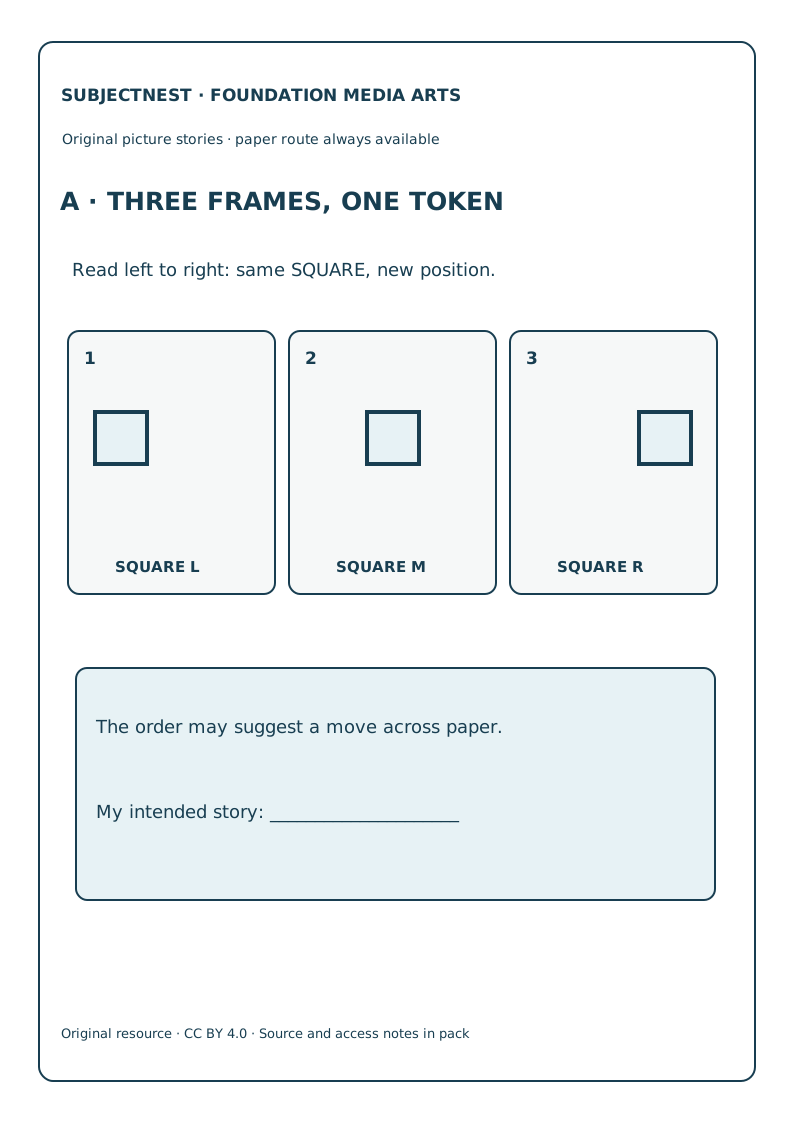
- Welcome · 3 min. Show three numbered rectangles called frames. Nothing actually moves on screen; the sequence is a visual suggestion.
- Model · 4 min. Place one identical SQUARE at L, M, R in order; say “a reader might see a move across paper.”
- Try together · 5 min. Ask which shape stayed and which position changed. Offer pointing or raised cells.
- Child choice · 7 min. Child arranges the same three frames for an invented paper stage and names a possible beginning/end by a chosen route.
- Notice · 4 min. Count frames 1–3 and record child intention, not a measured viewer interpretation.
- Close · 2 min. Save sequence; tomorrow the same two pictures can mean different things in a different order.
Week 1 · Day 2 · Order can make arrival or departure
Target/codes: compare EMPTY→SQUARE IN BOX with its reverse and explain an intended change; AC9AMAFD01, AC9AMAFC01. Prepare: B reverse-order aid, two broad panels, B.
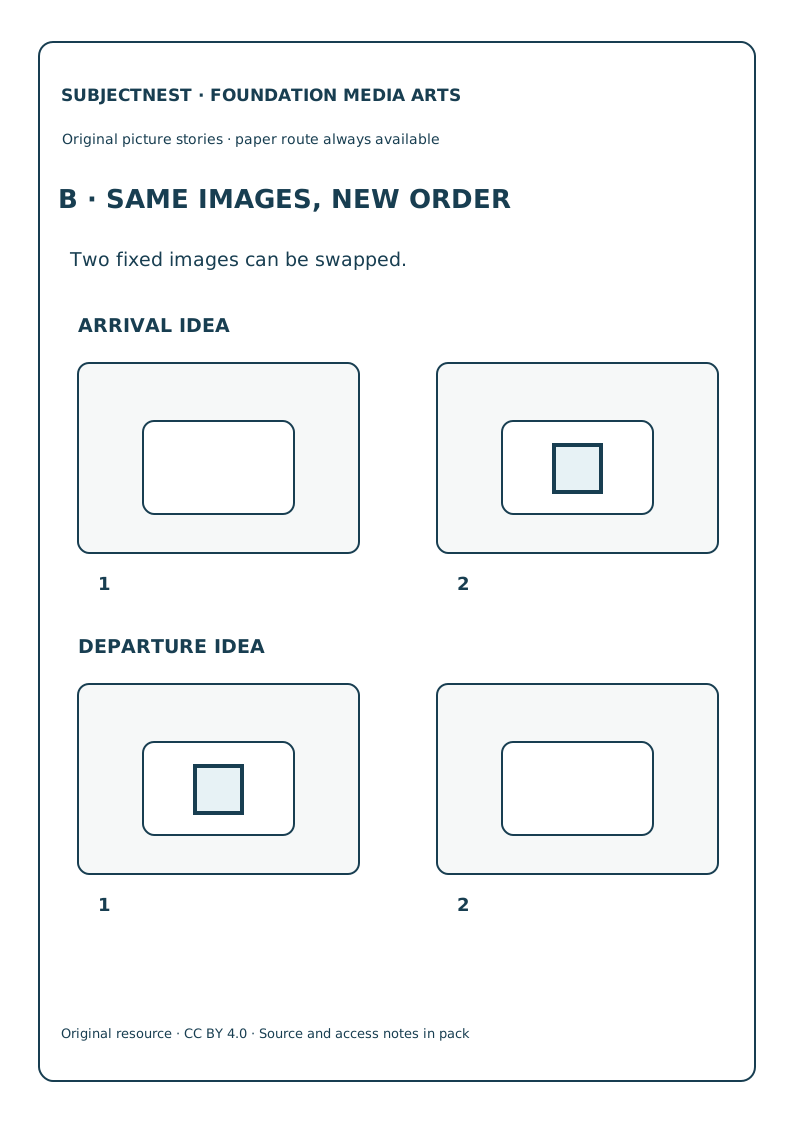
- Welcome · 3 min. Show an empty box image and the same box with a square inside. No real object is filmed.
- Model · 4 min. Place EMPTY first; a viewer might read arrival. Reverse panels; a viewer might read departure.
- Try together · 5 min. Ask which pictures stayed and which feature changed: their order.
- Child choice · 7 min. Child chooses order for a fictional paper parcel story and gives a possible reason.
- Notice · 4 min. Record panel order and child intended reading. Do not insist on a single viewer interpretation.
- Close · 2 min. Keep both variants; tomorrow the drawn frame can include less context.
Week 1 · Day 3 · Wide and close views
Target/codes: compare a WIDE frame with a CLOSE crop around the same square and identify what is left out; AC9AMAFD01, AC9AMAFC01. Prepare: C crop frames, large crop window, C.
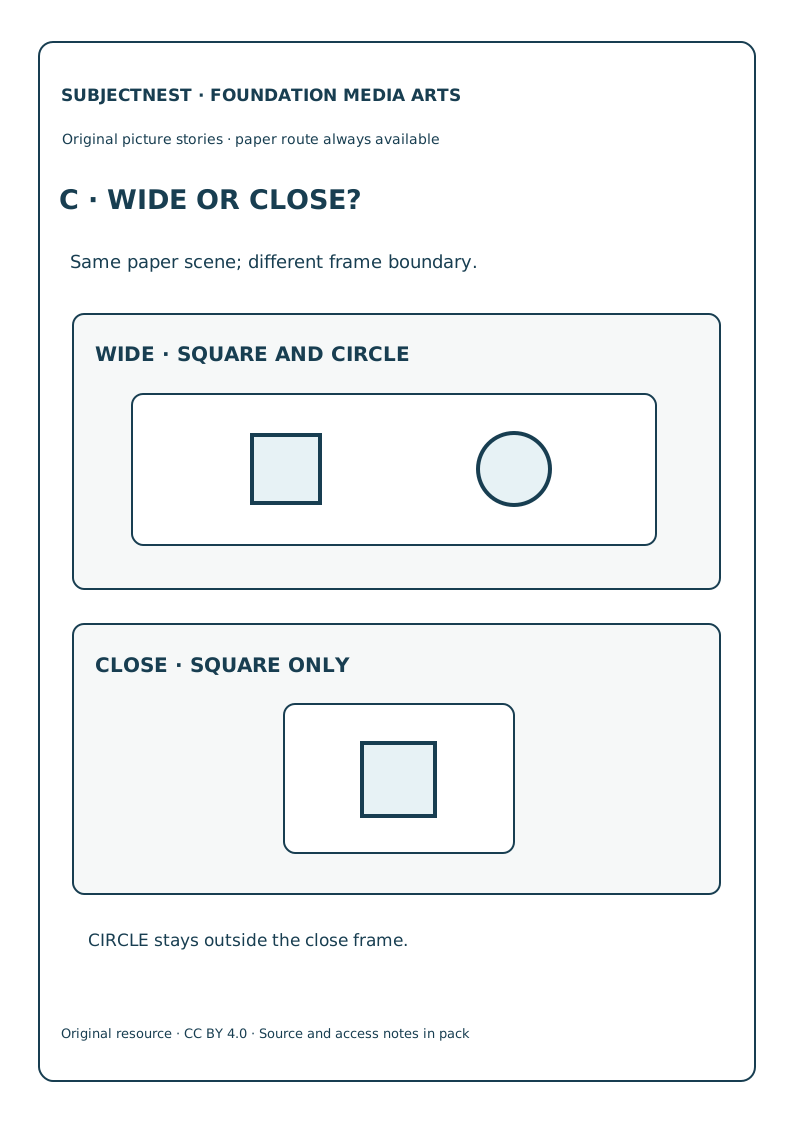
- Welcome · 3 min. Lay a paper square and circle on the table; they are neutral invented tokens.
- Model · 4 min. Place wide border around both; then close border around square only. The circle remains on the table but outside the close frame.
- Try together · 5 min. Ask “What can the paper viewer see in each?” Allow exact oral/tactile frame descriptions.
- Child choice · 7 min. Child chooses one frame for a fictional “look at the square” card and explains what context is kept or omitted.
- Notice · 4 min. Check that a close crop was not misdescribed as destroying the circle; it is simply outside the selected view.
- Close · 2 min. Save both borders; a caption can point to one detail tomorrow.
Week 1 · Day 4 · A caption directs attention
Target/codes: hold one image of square and circle while choosing a caption that names one intended focus; AC9AMAFD01, AC9AMAFC01. Prepare: D caption focus, broad word/symbol cards, D.
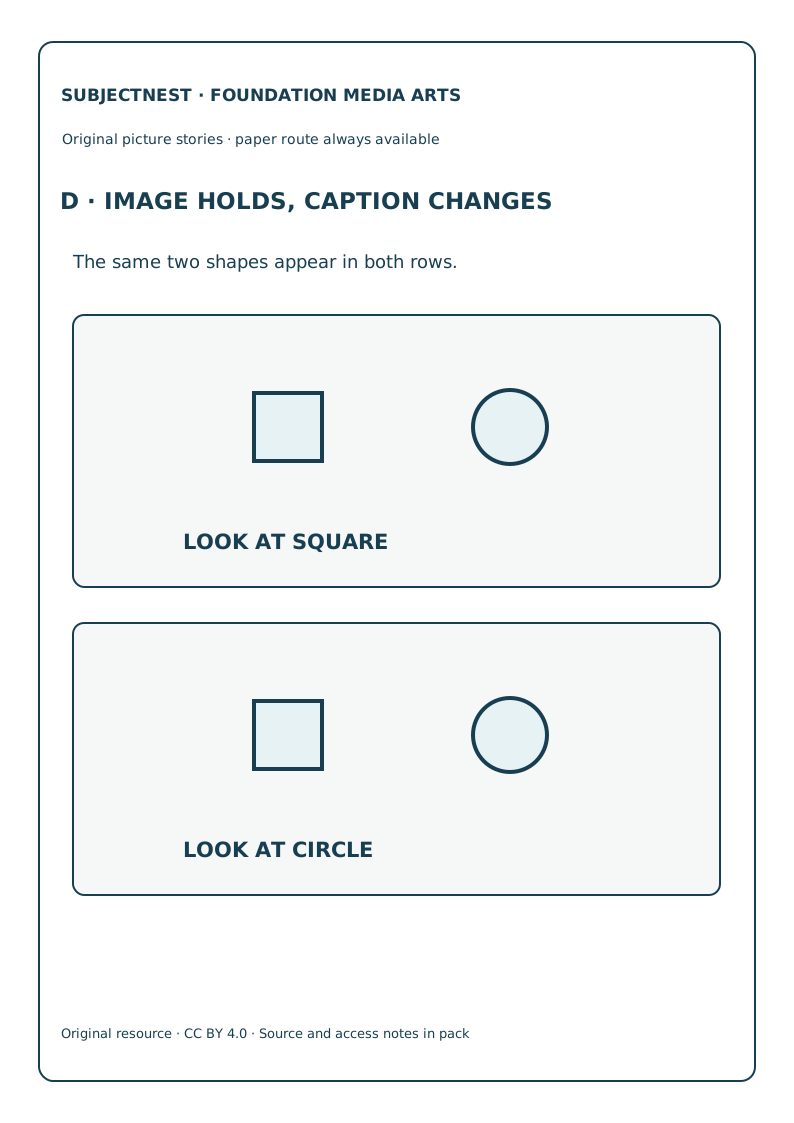
- Welcome · 3 min. Show the same image twice. Captions can be read aloud or represented by a thick pointer card.
- Model · 4 min. Put “LOOK AT SQUARE” under one and “LOOK AT CIRCLE” under the other. The image stays.
- Try together · 5 min. Ask what changed: the caption's intended focus. No child needs to read independently.
- Child choice · 7 min. Child chooses which detail matters in an invented paper display and adds a caption/point symbol through any route.
- Notice · 4 min. Record caption and child's reason; avoid claiming all viewers noticed it.
- Close · 2 min. Keep one version. Fresh Check A uses different images and order.
Week 1 · Day 5 · Fresh Check A: paper box arrival or exit
Target/codes: independently reverse two new image panels to meet a stated fictional visual story; AC9AMAFD01, AC9AMAFC01. Prepare: new G public check, G A4, broad EMPTY/TRIANGLE cards. Keep key closed until first response.
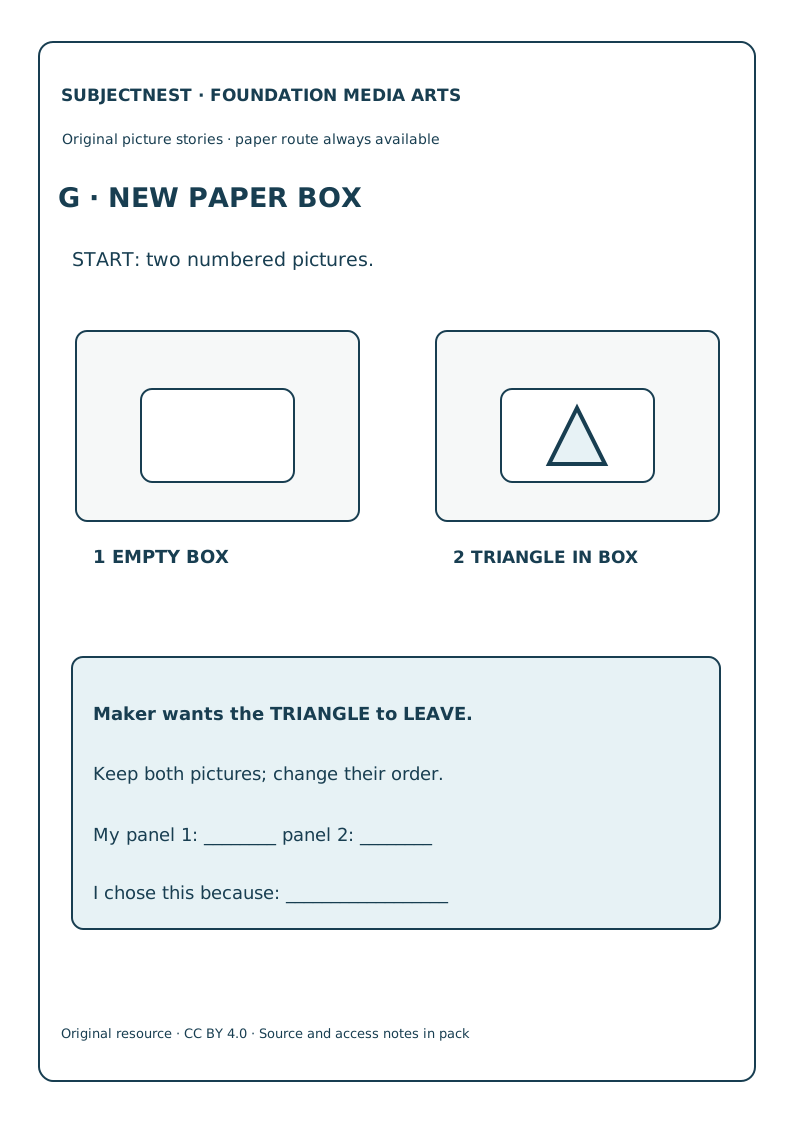
- Welcome · 3 min. This is a new picture puzzle for next teaching, not a test of reading or device operation.
- Access · 4 min. Present starting
EMPTY BOX → TRIANGLE IN BOXand the maker's new intention neutrally; do not swap cards for the child. - Independent plan · 5 min. Child chooses the order so the triangle appears to leave the paper box.
- Child response · 7 min. Child shows both numbered panels, points to the order choice and gives a possible reason; adult saves first response verbatim.
- Self-check · 4 min. Invite the child to identify panel 1 and panel 2 without coaching the answer.
- Close · 2 min. Save first response before key; Day 5 swaps use other sources after check.
Week 2 · Day 6 · Choose a different ending
Target/codes: hold frames 1–2 at LEFT/MIDDLE and choose RIGHT or return LEFT at frame 3; AC9AMAFD01, AC9AMAFC01. Prepare: E ending choice, E, broad square.
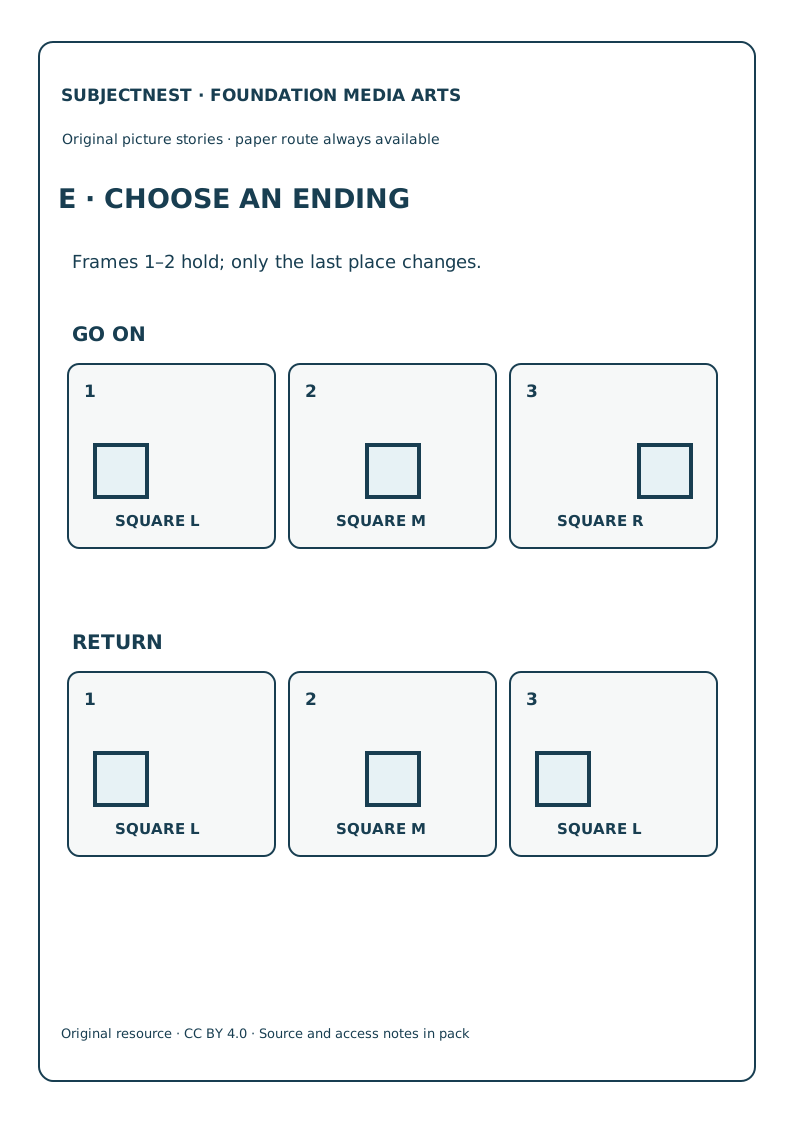
- Welcome · 3 min. Read three frames left to right. Show two different endings.
- Model · 4 min. Keep first two positions LEFT then MIDDLE; change only frame 3 RIGHT→LEFT.
- Try together · 5 min. Ask which frame changes and which positions hold. Trace with numbered paper cells.
- Child choice · 7 min. Child chooses an ending for an invented paper game/story and gives a possible intention.
- Notice · 4 min. Record all three positions and child's explanation, not a viewer's actual reaction.
- Close · 2 min. Keep both endings to consider an audience tomorrow.
Week 2 · Day 7 · What would another reader need?
Target/codes: choose one clarifying caption or position label for a willing reader while holding a three-frame sequence; AC9AMAFD01, AC9AMAFC01. Prepare: F maker/share log, A frame path, large L/M/R labels.
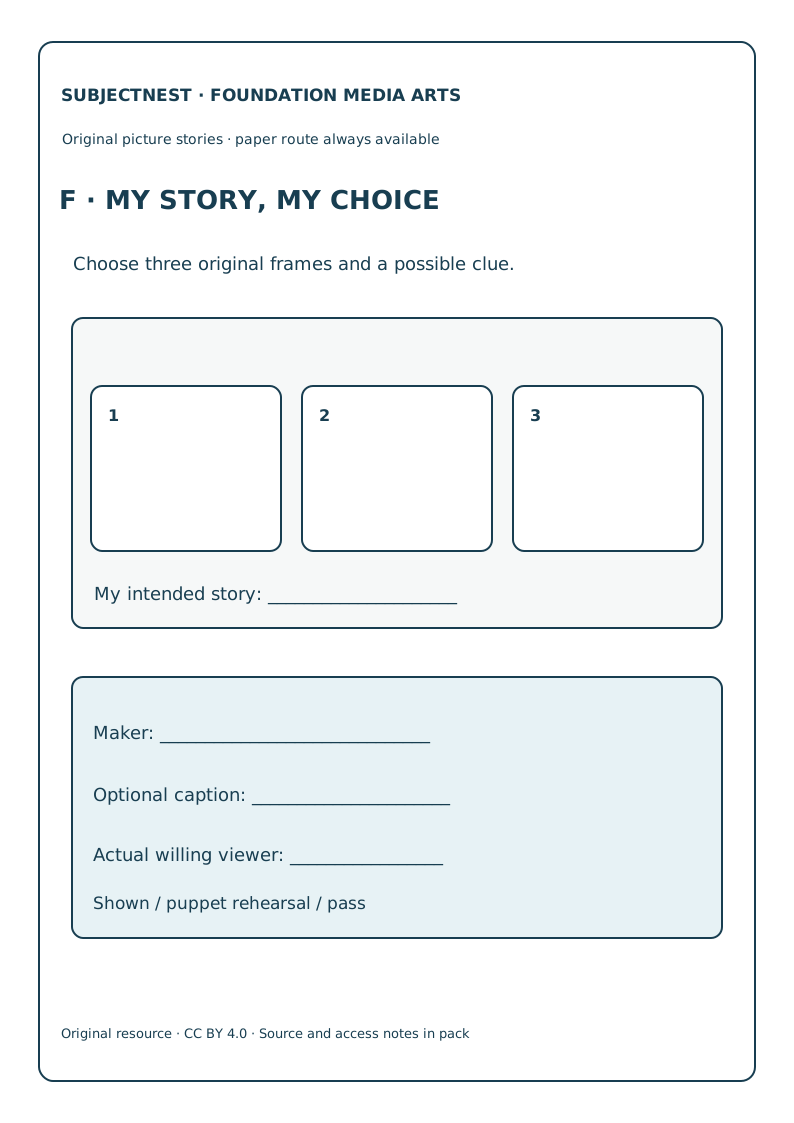
- Welcome · 3 min. Show the original L/M/R sequence and a separate optional caption strip. No actual audience is presumed yet.
- Model · 4 min. Add “SQUARE MOVES RIGHT” as an intended clue, then remove it. Same pictures, different text support.
- Try together · 5 min. Ask what stayed (frame order and token) and what changed (caption/label).
- Child choice · 7 min. Child chooses a short word, arrow or no caption for a fictional paper visitor and explains why.
- Notice · 4 min. Record the child's intentional clue; no one is asked to disclose language level or reading ability.
- Close · 2 min. Save caption choice for a child-owned storyboard.
Week 2 · Day 8 · Make a tiny original storyboard
Target/codes: make a coherent three-frame geometric image sequence and state its intended beginning/end; AC9AMAFD01, AC9AMAFC01. Prepare: F maker/share log, A–E examples, blank large three-frame strip.
- Welcome · 3 min. Show that a storyboard is a planned order of images. It may itself be a small paper media work if the child makes the choices.
- Model · 4 min. Adult's own example: CIRCLE at RIGHT, MIDDLE, LEFT. Name maker and intention; children may choose another path.
- Try together · 5 min. Point to first, middle, last and ask what the child might keep or change.
- Child choice · 7 min. Child creates or directs a three-frame original token story, with optional caption, by paper/drawing/AAC route.
- Notice · 4 min. Record actual positions, intended story and who decided them; do not assign the adult's template as the child's work.
- Close · 2 min. Store under local policy without photographing; tomorrow sharing and real media sources are considered.
Week 2 · Day 9 · Real makers and a willing viewer
Target/codes: ask maker/context/permission questions about authorised real media, and choose if/how to share an original paper sequence; AC9AMAFE01 as opening inquiry, AC9AMAFP01 only if actual sharing occurs. Prepare: F maker/share log, authentic source slot, child's original work.
- Welcome · 3 min. A child may show work to one willing educator, a small group later, a paper puppet in rehearsal or pass. No publication or recording.
- Model · 4 min. Adult shares their own original paper sequence with a willing adult, recording actual recipient. For real media, use only school-approved first-party maker/source information; do not copy frames without rights.
- Try together · 5 min. Ask “Who made this real work?” and “Why do its makers say it matters?” Keep unknown answers open, especially community/cultural claims.
- Child choice · 7 min. Child selects an original storyboard and optional willing viewer. If actually shown, record who saw what and whether the child explained it. Puppet rehearsal/pass is valid participation but not actual-audience evidence.
- Notice · 4 min. Ask for one child-selected frame/caption choice; do not infer viewer reaction or publication consent.
- Close · 2 min. Save only what local privacy policy allows and note source permissions for later real-work learning.
Week 2 · Day 10 · Fresh Check B: paper circle return
Target/codes: independently change one final frame in a new three-frame circle sequence while holding frames 1–2; AC9AMAFD01, AC9AMAFC01, AC9AMAFP01 only for actual sharing. Prepare: new H public check, H A4, large circle positions. Keep key closed until first response.
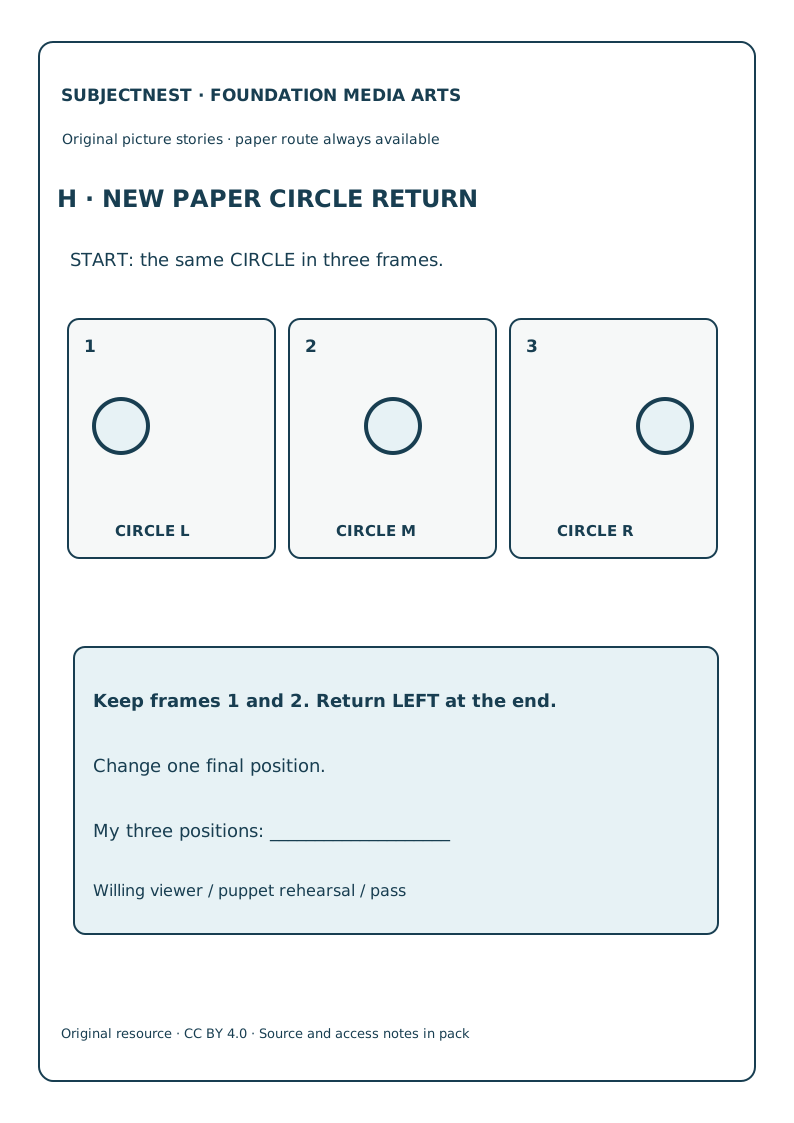
- Welcome · 3 min. Introduce new circle frames for a fictional paper stage; this is a public teaching probe, not a photography task.
- Access · 4 min. Present starting CIRCLE LEFT, MIDDLE, RIGHT and the maker's wish for the circle to return LEFT at the end. Do not suggest which frame to alter.
- Independent plan · 5 min. Child identifies held frames 1–2 and chooses one final-position change.
- Child response · 7 min. Child shows all three frames and a possible reason by selected route. Record first choice and any actual willing recipient separately.
- Self-check · 4 min. Invite the child to point to the frame changed and the two held frames, without supplying the answer.
- Close · 2 min. Save first response, then consult key and plan later real media encounters and broader production opportunities.